
Accounting

AI in finance 1

AI in Finance: Your Competitive Edge in the Job Market

The profession’s biggest shift since ERP and cloud accounting — and a roadmap for building it on top of real finance fundamentals, not instead of them. Artificial Intelligence is reshaping the finance profession by automating routine tasks, accelerating data analysis, and improving decision-making. But AI only works when it sits on top of a strong […]

AI in Finance: Your Competitive Edge in the Job Market Read More »

EBITDA 1

 Why EBITDA Matters in the Corporate World

Why EBITDA Matters in the Corporate World In today’s competitive business environment, evaluating a company’s true operating performance goes beyond simply looking at its net profit. Investors, lenders, equity analysts, investment bankers, private equity firms, and corporate managers need a measure that reflects how efficiently a business generates earnings from its core operations, independent of

 Why EBITDA Matters in the Corporate World Read More »

Decoding Bad Debts and Provision for Bad Debts (PBD)

Decoding Bad Debts and Provision for Bad Debts (PBD)

In business, credit sales are common, and customers (debtors) become an important asset of the organization. However, not every amount due from customers may be collected in full. Some customers may fail to pay, resulting in Bad Debts. Accounting follows the principles of prudence and accrual, which require businesses to recognize possible losses relating to

Decoding Bad Debts and Provision for Bad Debts (PBD) Read More »

Balance sheet 1

Decoding the Balance Sheet: Assets, Liabilities and Owner’s Equity

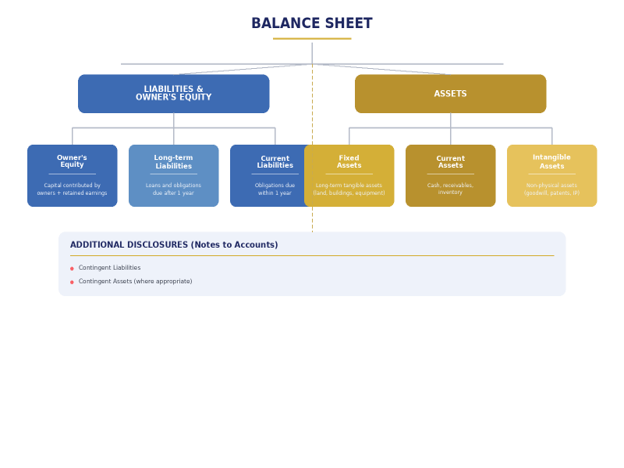
The journey of accounting does not end with calculating profit. After preparing the Trading Account and the Profit & Loss Account, the next step is to understand what the business owns, what it owes, and what belongs to the owner. This information is presented in the Balance Sheet, one of the most important financial statements.

Decoding the Balance Sheet: Assets, Liabilities and Owner’s Equity Read More »

Trial balance

Trial Balance – The Gateway to Financial Statements

Imagine that a business has recorded hundreds of transactions during a month. These transactions have been entered in the Journal and subsequently posted to various Ledger Accounts such as Cash, Bank, Sales, Purchases, Rent, Capital and Creditors. At this stage, an important question arises: How can an accountant verify that the debit and credit entries

Trial Balance – The Gateway to Financial Statements Read More »

Ledger and trial balance

Understanding Ledger and Trial Balance

Imagine that a business records hundreds of transactions every month. While the Journal records transactions in chronological order, it does not tell us the total cash available, the amount owed by customers, or the amount payable to suppliers. To obtain this information, accountants classify journal entries into separate accounts known as Ledgers. Once the balances

Understanding Ledger and Trial Balance Read More »

Journal entries in accounting

Understanding Journal Entries in Accounting

Many students come from non-commerce backgrounds and often find accounting terminology confusing. Terms such as Journal, Ledger, Voucher, Debit, Credit and posting may appear technical at first. However, accounting is essentially a systematic method of recording business transactions. Before an accountant records a transaction, an important question must be answered: “What evidence exists that the

Understanding Journal Entries in Accounting Read More »

Accounting cycle

Accounting: From Events to Financial Statements

Accounting is often described as the language of business. Yet, many students are introduced to accounting as a subject of rules, formats, journal entries and calculations. As a result, they sometimes learn the mechanics of accounting without understanding the logic behind it. Accounting is a systematic process of identifying, recording, classifying, summarizing and communicating financial

Accounting: From Events to Financial Statements Read More »