
India’s new Income-tax Act, 2025 introduces a redesigned legislative framework for direct taxation, effective from 1 April 2026. While the previous articles explored the major changes and the transition from Previous Year and Assessment Year to Tax Year, this article examines how the new Act is organised and how its structure may help taxpayers, students and professionals understand tax law more effectively.
Key Structural Changes in the Income-tax Act, 2025
1. Why Was the Structure Redesigned?
The Income-tax Act, 1961 evolved through decades of amendments, explanations and provisos, making some provisions difficult to navigate.
The Income-tax Act, 2025 aims to improve clarity through:
- Simplified statutory language.
- Consolidation of related provisions.
- Reduction of redundant material and unnecessary cross-references.
- Improved presentation of rules through tables and formulas.

2. A Comparison of the Two Acts
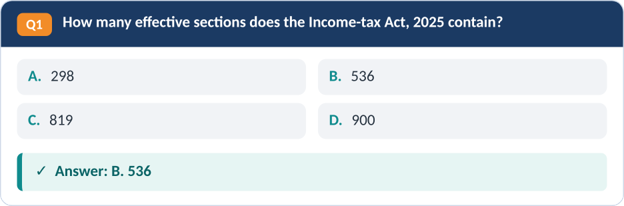
The new Act reorganises the legislative structure and reduces the number of effective sections.

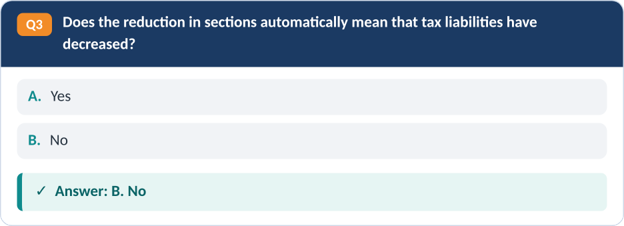
The reduction in sections does not automatically mean fewer tax obligations. Many provisions have been reorganised, consolidated or rewritten.
3. Simplified Language and Drafting
The new Act seeks to make provisions more accessible by:
- Integrating explanations and provisos into the main text where appropriate.
- Reducing unnecessary cross-referencing.
- Removing redundant provisions.
- Presenting related conditions more coherently.

4. Greater Use of Tables and Formulas
The new Act uses tables and formulas to present certain provisions more clearly.
- Tables help compare categories, conditions and applicable rules.
- Formulas present calculation methods in a structured manner.
- Integrated provisions can make related requirements easier to follow.
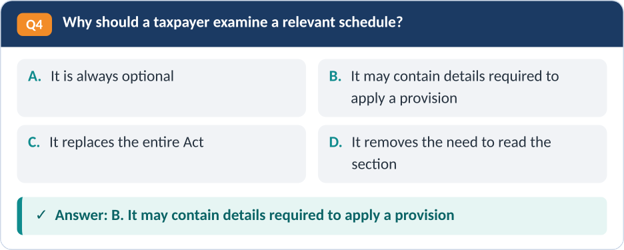
However, taxpayers must still examine the relevant section, definitions, exceptions and applicable rules before applying a provision.
5. Changes in Rules and Forms
The restructuring also extends to the supporting Income-tax Rules.

The new framework aims to streamline supporting rules and forms. However, fewer forms do not necessarily mean fewer compliance obligations for every taxpayer.
6. What Do the Changes Mean for Taxpayers?
The practical implications can be summarised in four points:
- Easier navigation: A more organised structure may help readers locate relevant provisions.
- Better comprehension: Clearer drafting can help students and professionals understand statutory requirements.
- Compliance awareness: Taxpayers must still use the correct forms and follow applicable deadlines.
- Transition awareness: Earlier tax years and related proceedings may continue to be governed by the Income-tax Act, 1961 under the applicable transitional provisions.

Quick Check