
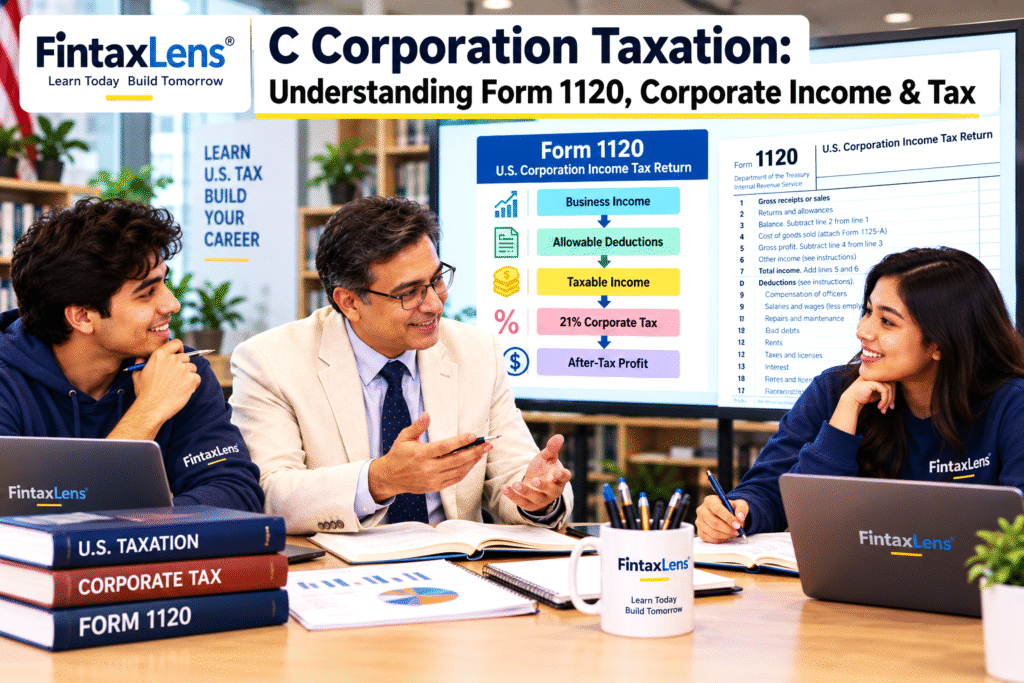
After understanding the basics of C Corporations and S Corporations and then exploring Schedule K-1, it is time to look at how a C Corporation reports and pays federal income tax.
Unlike a partnership or S Corporation, a C Corporation is generally treated as a separate taxpayer for U.S. federal income-tax purposes.
Andrew: Professor, does that mean the corporation itself pays the tax?
Professor: Exactly, Andrew. A C Corporation generally reports its own income, deductions, taxable income, and federal income tax.
The principal federal tax return is:
Form 1120 — U.S. Corporation Income Tax Return
1. What is Form 1120?
Form 1120 is generally used by domestic corporations to report their income, deductions, credits, and federal income-tax liability.
At a simplified level, the process can be viewed as:
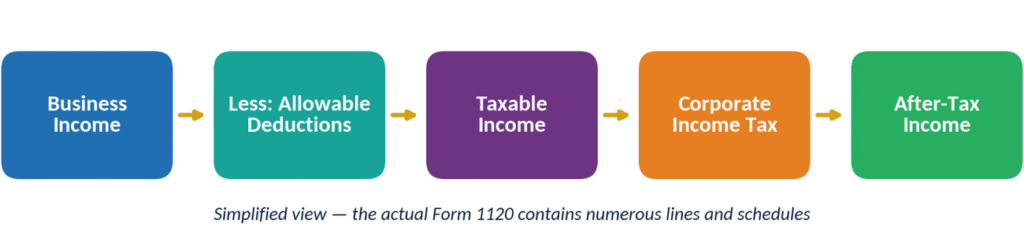
The actual Form 1120 contains numerous lines and schedules, but understanding this basic flow provides the foundation for studying corporate taxation.
2. Revenue is Not the Same as Taxable Income
Andrew: Professor, is corporate tax calculated simply on total sales?
Professor: No. Sales or gross receipts are only the starting point. Taxable income is determined after considering applicable income items, deductions, limitations, and tax adjustments.
Consider a simplified example:
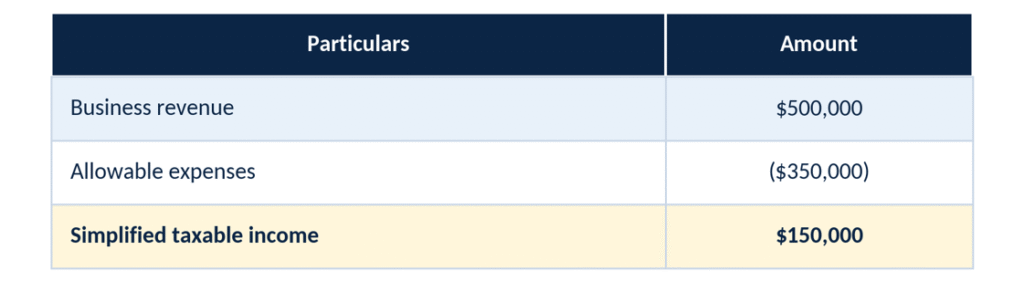
This is an educational illustration only. An actual corporate tax return can involve many additional adjustments.
The key concept is:

3. Corporate Tax Rate
The regular federal corporate income-tax rate is generally:

Using the simplified example above:

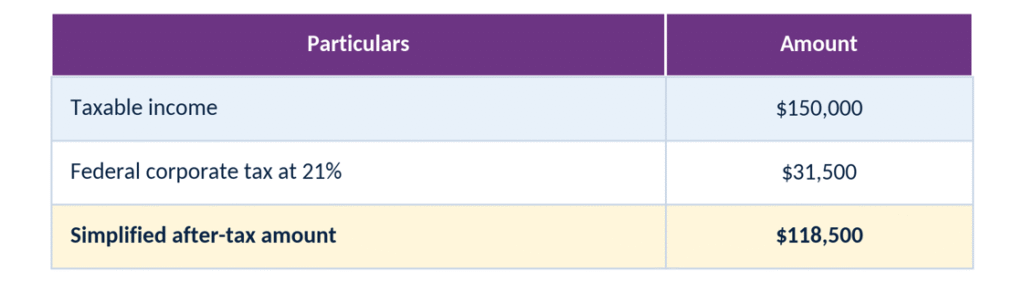
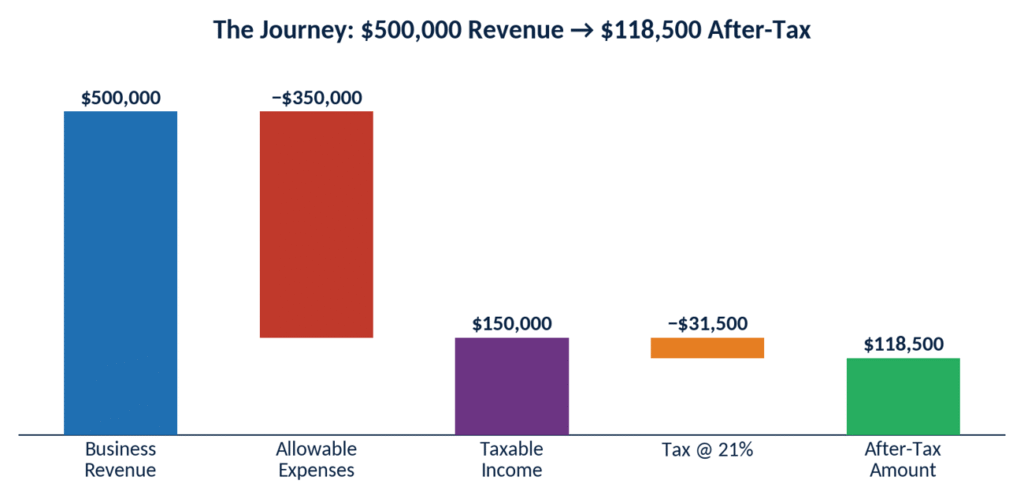
Actual tax liability may be affected by applicable credits, special taxes, limitations, and other provisions.
4. What Goes Into Form 1120?
A C Corporation may have several types of income and deductible expenses.
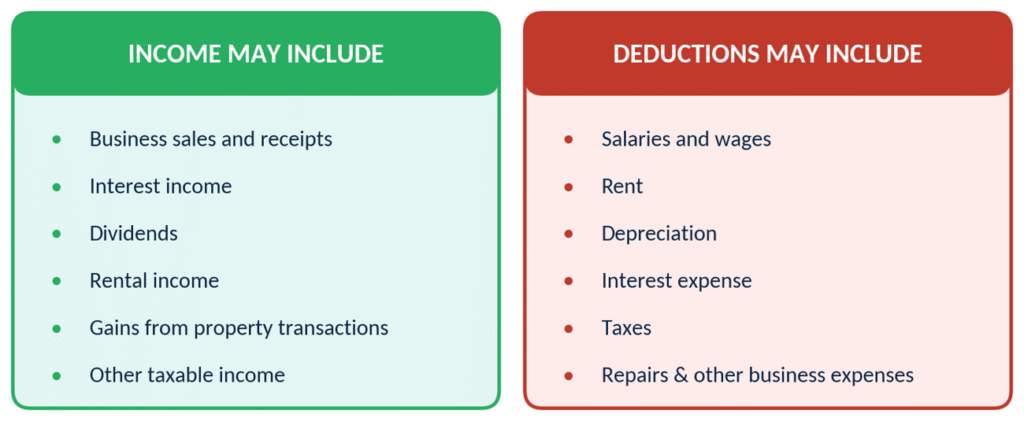
However, an expense recorded in the accounting books does not automatically mean that the same amount is deductible for tax purposes.
This is why tax professionals must understand the relationship between accounting records and tax rules.
5. Book Income vs. Taxable Income
A corporation may prepare financial statements using applicable accounting standards while preparing its tax return under U.S. federal tax law. Therefore, financial statement income and taxable income may differ.
A simplified way to remember the relationship is:
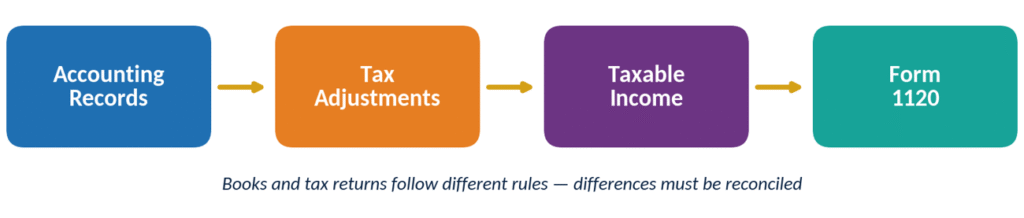
This concept is particularly important for students preparing for careers in tax, accounting, audit, and consulting.
6. Does a C Corporation Use Schedule K-1?
This connects directly with our previous blog.
Andrew: Professor, if an S Corporation provides shareholders with Schedule K-1, does a C Corporation do the same?
Professor: No. That’s an important distinction.
A C Corporation does not generally use Schedule K-1 to pass its corporate income through to shareholders.
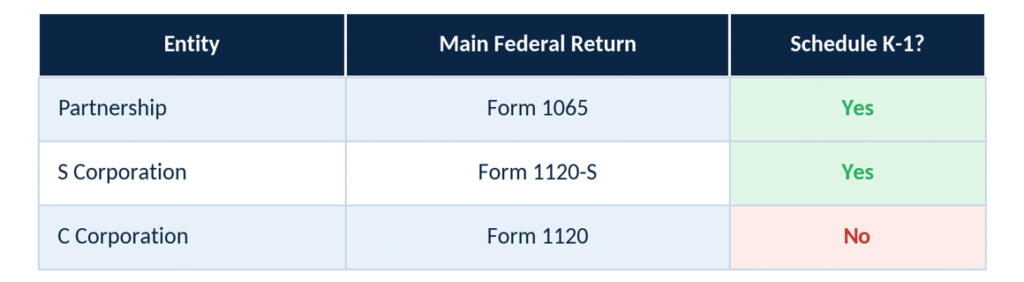
So, remember

7. What Happens When Profits Are Distributed?
Suppose a C Corporation earns taxable income and pays corporate income tax. Later, the corporation may distribute part of its after-tax profits to shareholders as dividends, subject to the applicable rules.
This can create two levels of tax:
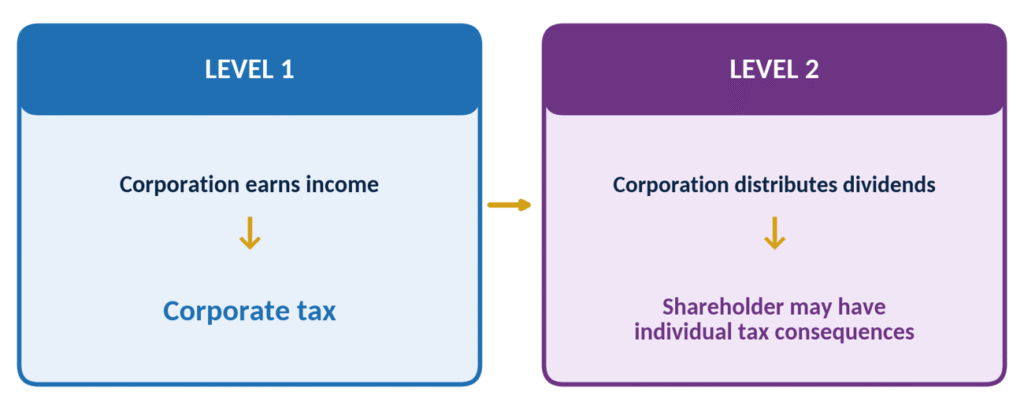
This is commonly described as double taxation in the C Corporation context. It is one of the fundamental differences between C Corporation taxation and the pass-through treatment generally associated with partnerships and S Corporations.
8. C Corporation Tax Flow
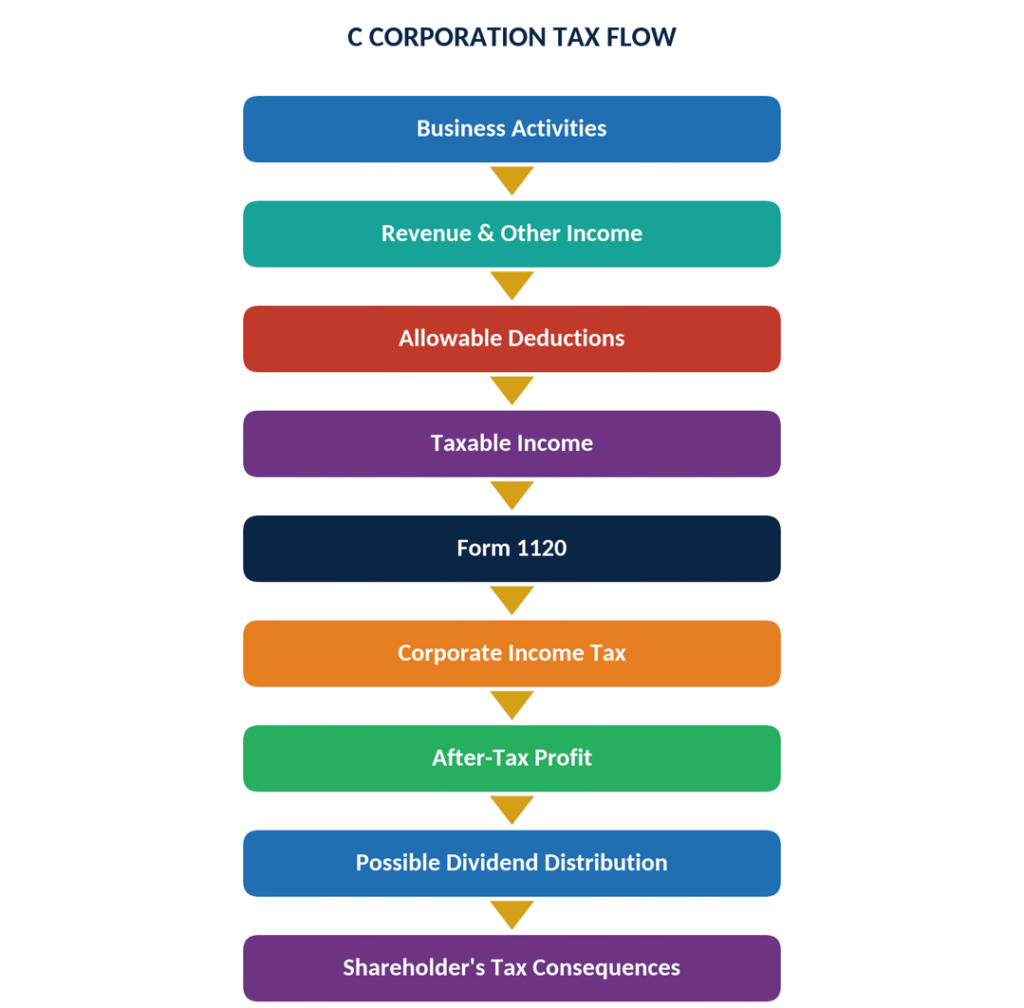
This flow provides a useful foundation for understanding more advanced corporate taxation.
9. U.S. Tax Interview Quick Questions





Quick Check






Conclusion
Understanding C Corporation taxation begins with one fundamental relationship:

The corporation is generally a separate taxpayer, and its shareholders are treated separately. Unlike partnerships and S Corporations, a C Corporation does not generally pass its corporate income through to shareholders using Schedule K-1.
Andrew: Professor, so Form 1120 is the starting point for understanding how a C Corporation reports its federal income tax.
Professor: Exactly, Andrew. Once you understand the flow from business transactions to Form 1120 and corporate tax, you are ready to explore the return itself in greater detail.
DISCLAIMER
For educational purposes only. This content provides a high-level overview of U.S. federal tax fundamentals for students and should not be construed as tax, legal, or professional advice. U.S. federal tax rules can vary depending on the taxpayer’s facts, entity classification, tax year and applicable exceptions. Always refer to current IRS instructions and applicable law before filing.
Really helpful for concept clearance