

The Financial Challenges Inside a Manufacturing Business
From Accounting Records to Financial Understanding
How inventory, receivables, supplier payments and operating cash flow influence the financial health of a manufacturing business.
It was David’s second week at Aarohan Manufacturing Ltd.
After his initial visit to the factory floor, he had begun to understand how raw materials moved through production and eventually became finished products.
However, one question continued to bother him.
The company was manufacturing products, generating sales and reporting profits. Yet Mr. Sen had mentioned that the business was experiencing pressure on its cash position.
David decided to discuss this with Mr. Sen.
David: Good morning, Sir. I was reviewing some of the company’s financial information yesterday. I noticed that the business is generating revenue, but you mentioned that cash flow is under pressure. How is that possible?
Mr. Sen: Good morning, David. That’s an important observation. A manufacturing business can report profits and still experience liquidity problems. To understand why, we must look beyond the income statement.
David: Do you mean inventory, receivables and supplier payments?
Mr. Sen: Exactly! These three areas are closely connected with working capital management.
The Inventory Question — Where is the Company’s Money?
Mr. Sen takes David to the stores department.
Several racks contain raw materials, components and semi-finished products.
Mr. Sen: David, what do you see here?
David: Raw materials and components waiting to be issued for production.
Mr. Sen: Correct. But remember, inventory represents money invested in materials and goods that have not yet completed their journey into sales and cash collection.
David: So, if we purchase excessive raw materials, our money remains blocked in inventory?
Mr. Sen: Precisely. Inventory is necessary for uninterrupted production, but excessive inventory can increase storage costs, insurance costs, handling costs and the risk of deterioration or obsolescence.
Let us consider an illustrative situation.

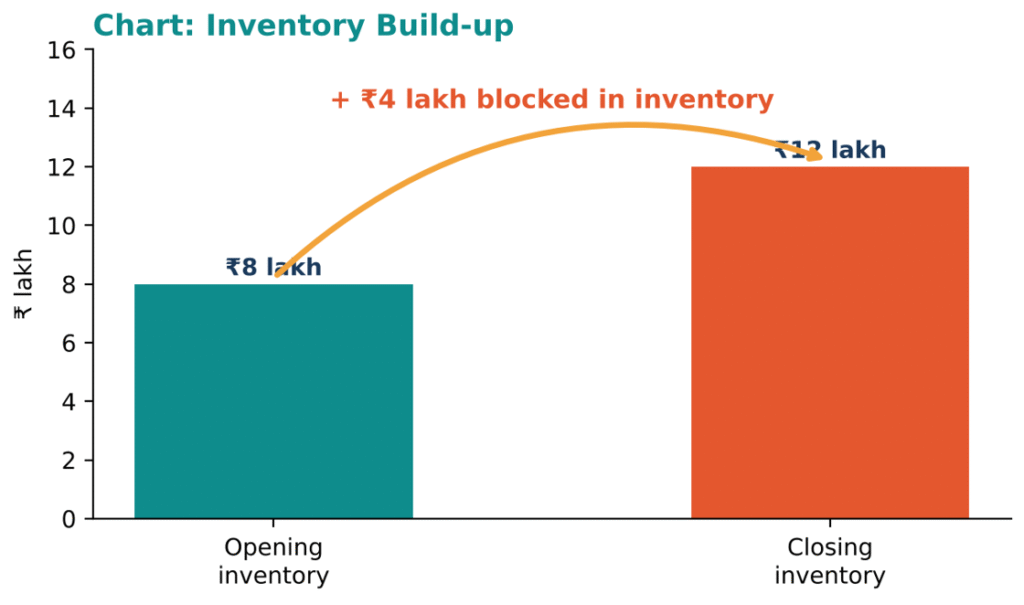
David: Sir, the closing inventory has increased from ₹8 lakh to ₹12 lakh. Does that mean an additional ₹4 lakh is blocked in inventory?
Mr. Sen: Yes, on this simplified comparison, the inventory investment has increased by ₹4 lakh. We must investigate whether this increase is justified by production requirements or whether materials are accumulating unnecessarily.
David: So, inventory management is not simply about maintaining sufficient stock. It is about maintaining the right quantity at the right time.
Mr. Sen: Well said!

The Receivables Challenge — Sales Are Not Cash
Mr. Sen takes David to the accounts department.
Mr. Sen: Now let us examine another important area: customer credit.
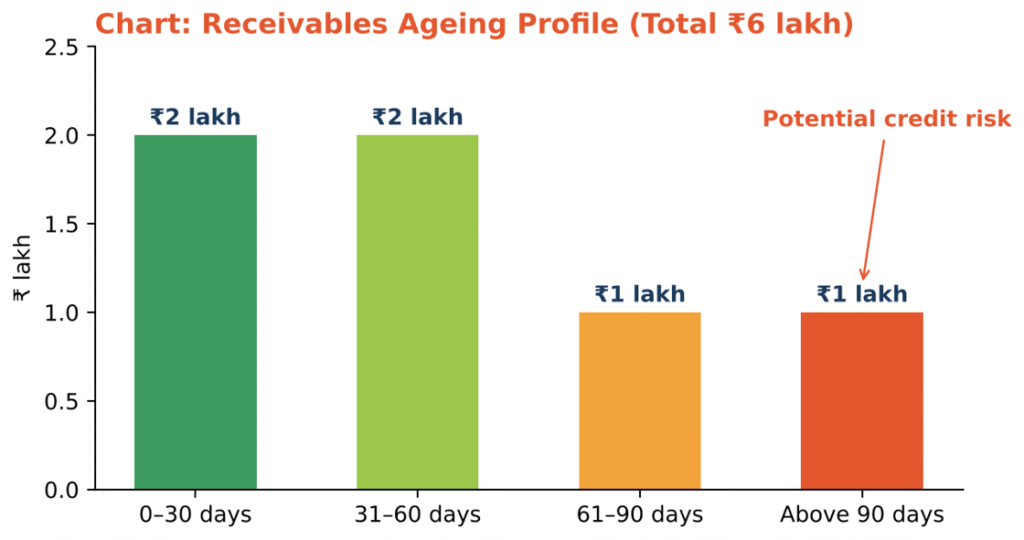
Suppose Aarohan Manufacturing Ltd. makes sales worth ₹20 lakh on 60 days’ credit.
David: That means the company records the sale today but receives the money after 60 days?
Mr. Sen: Correct. The sale generates revenue and an account receivable. But cash will be received only when the customer pays.
David: Then what happens if customers delay their payments?
Mr. Sen: The receivables balance increases, and the company may face a cash shortage even though its sales are growing.
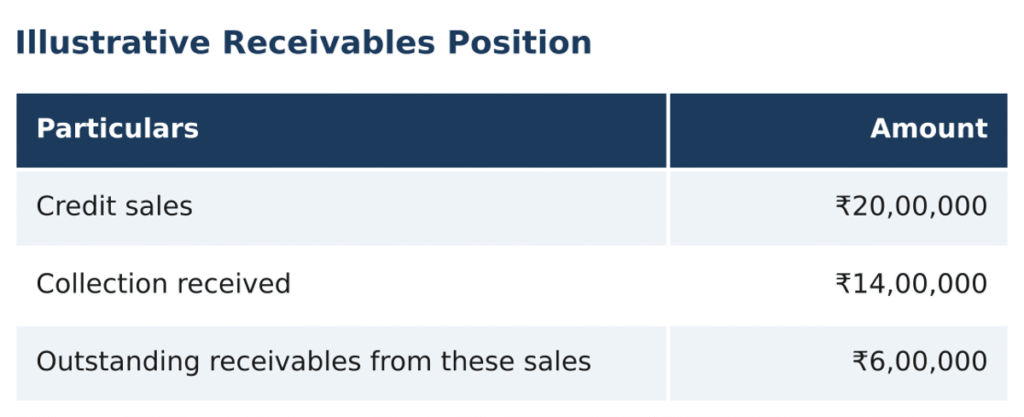
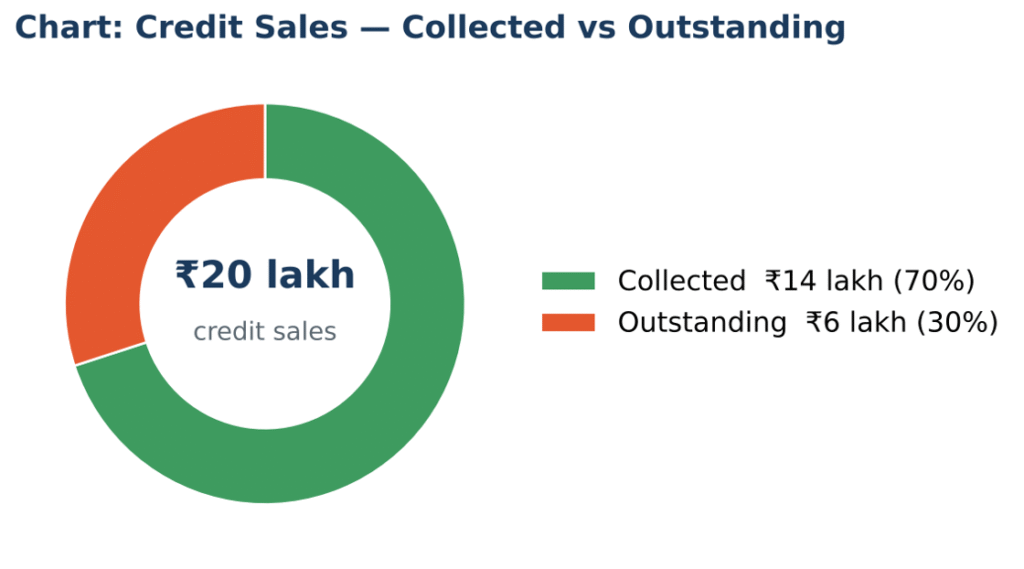
David: So, ₹6 lakh remains outstanding with customers.
Mr. Sen: Exactly. A finance professional must monitor not only sales growth but also the quality of receivables and the time taken to collect money.
David: Does that mean a company should avoid credit sales?
Mr. Sen: Not necessarily. Credit sales can help expand business. However, the company must establish appropriate credit policies, customer limits, collection procedures and ageing analysis.
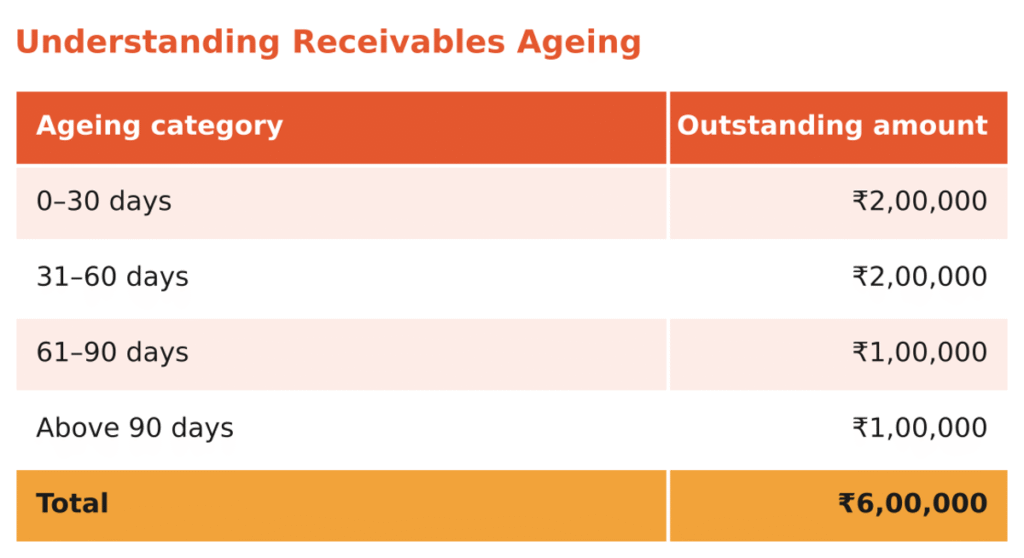
Mr. Sen: David, what concerns you in this statement?
David: The ₹1 lakh outstanding for more than 90 days. It may indicate delayed collection or a potential credit risk.
Mr. Sen: Correct. This is why receivables ageing is an important tool in financial control.
The Supplier Payment Challenge — Understanding the Cash Gap
David: Sir, we have discussed inventory and customer collections. What about payments to suppliers?
Mr. Sen: Good question. Let us assume our suppliers expect payment within 30 days, whereas our customers receive 60 days’ credit.
David: That means we have to pay suppliers before collecting money from customers.
Mr. Sen: Exactly! Let us examine the situation.
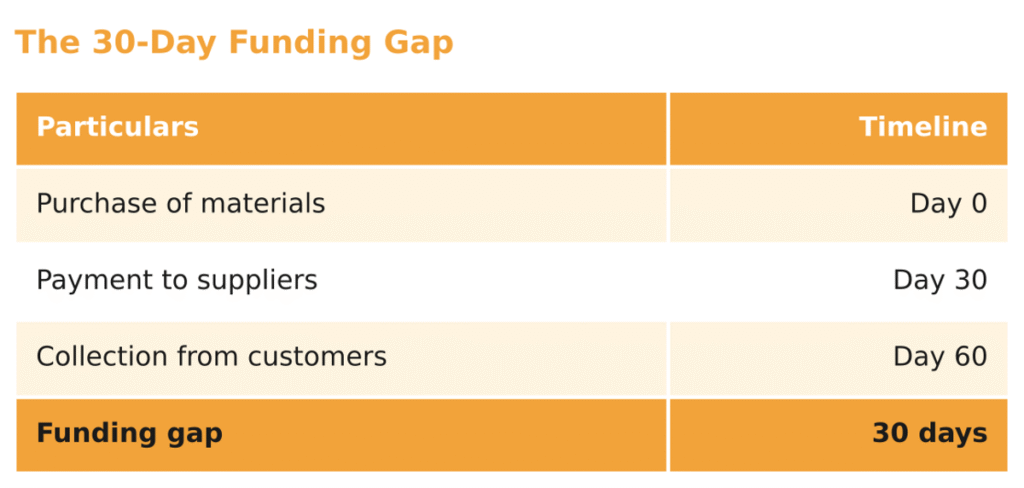
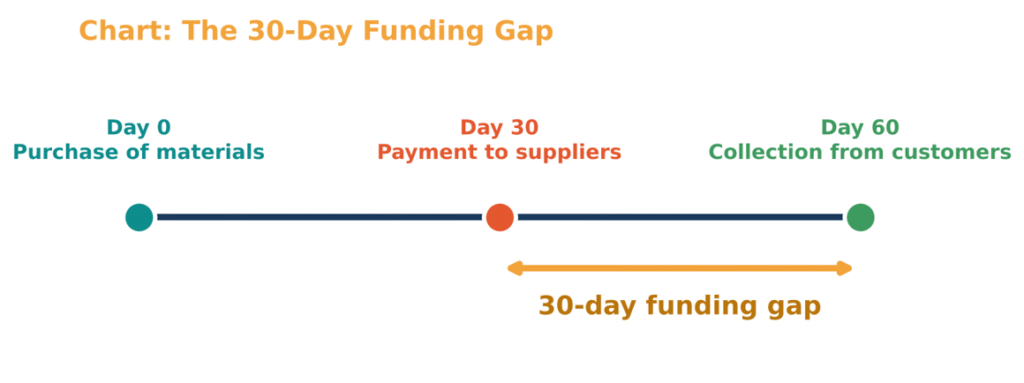
David: So, the company needs funds to bridge this 30-day gap.
Mr. Sen: Precisely. This is one of the reasons working capital management is so important in manufacturing businesses.
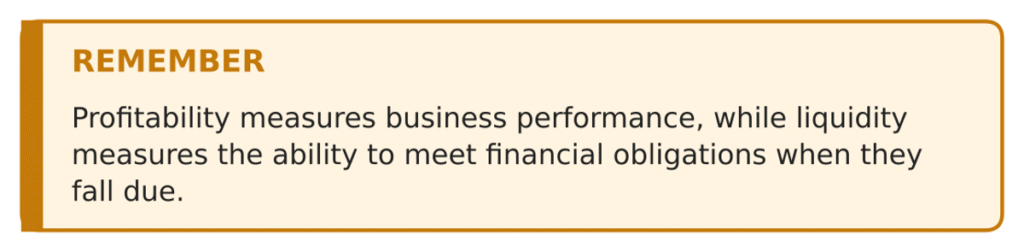
A company may be profitable, but if it cannot manage the timing of payments and collections, it may struggle to meet its day-to-day obligations.
The Operating Cash Flow Perspective
David: Sir, I now understand that inventory, receivables and payables influence cash. But how do we evaluate the overall operating cash position?
Mr. Sen: We examine the Cash Flow Statement, particularly cash flows from operating activities.
Let us take a simplified monthly illustration.
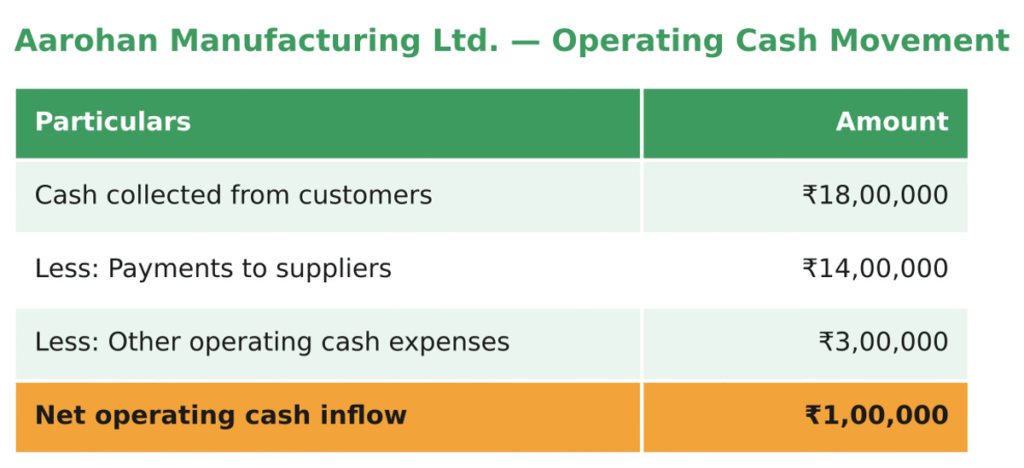
David: So, even though the company has generated substantial sales, its actual net operating cash inflow is only ₹1 lakh in this illustration.
Mr. Sen: Correct. Remember, this is a simplified cash movement illustration. A complete operating cash flow statement must also consider other relevant operating receipts and payments and the applicable accounting adjustments.
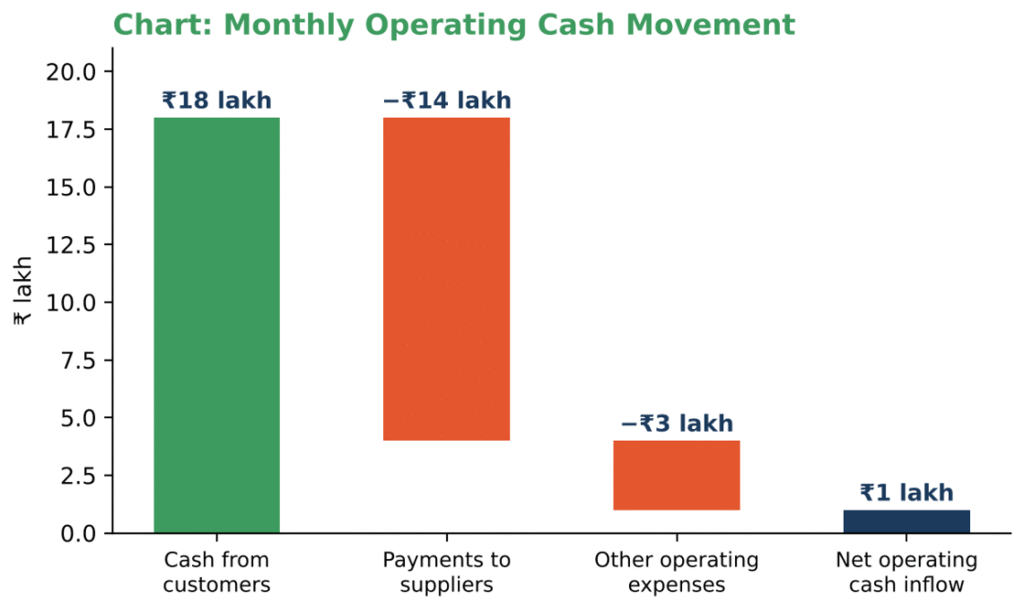
David: I think I am beginning to understand why the finance department must monitor both profitability and cash flow.
Mr. Sen: Exactly! Financial statements tell us different stories. Our job is to connect them.
Connecting the Concepts — The Working Capital Cycle
Mr. Sen draws a diagram on the whiteboard.
Mr. Sen: David, let us connect everything you have learned.
A manufacturing business typically follows this sequence:

David: So, money moves through the entire business cycle. The time taken to convert inventory and receivables into cash, after considering supplier credit, determines the operating cash cycle.
Mr. Sen: Excellent! You have reached an important concept — the Cash Conversion Cycle.

Let us assume:

Cash Conversion Cycle:

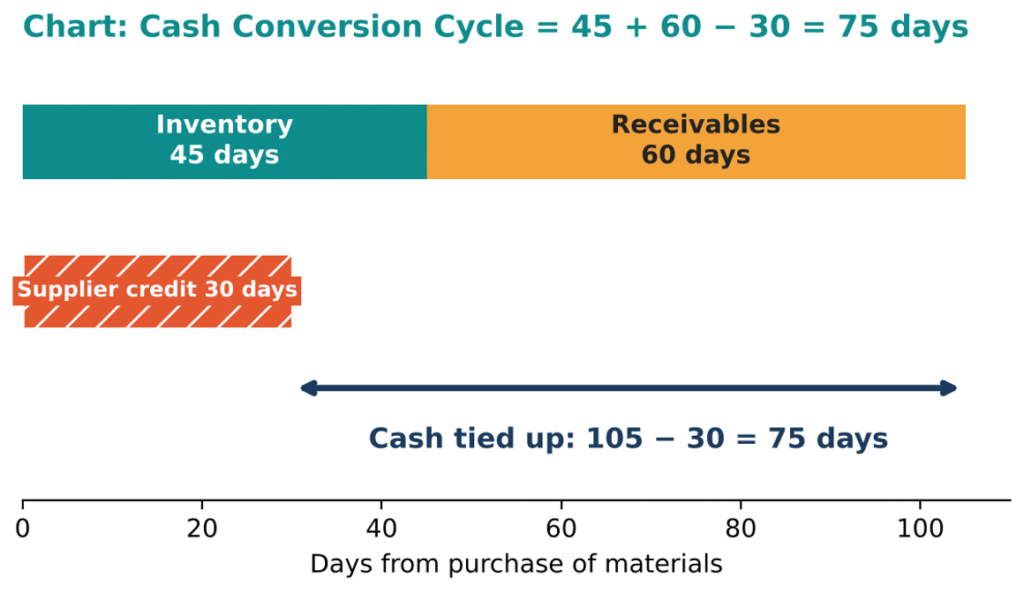
David: That means the company’s cash remains tied up in the operating cycle for approximately 75 days.
Mr. Sen: Correct, based on these illustrative assumptions. The shorter the cash conversion cycle, generally, the lower the amount of time funds remain tied up in operations.
However, reducing the cycle must not compromise production continuity or customer relationships.
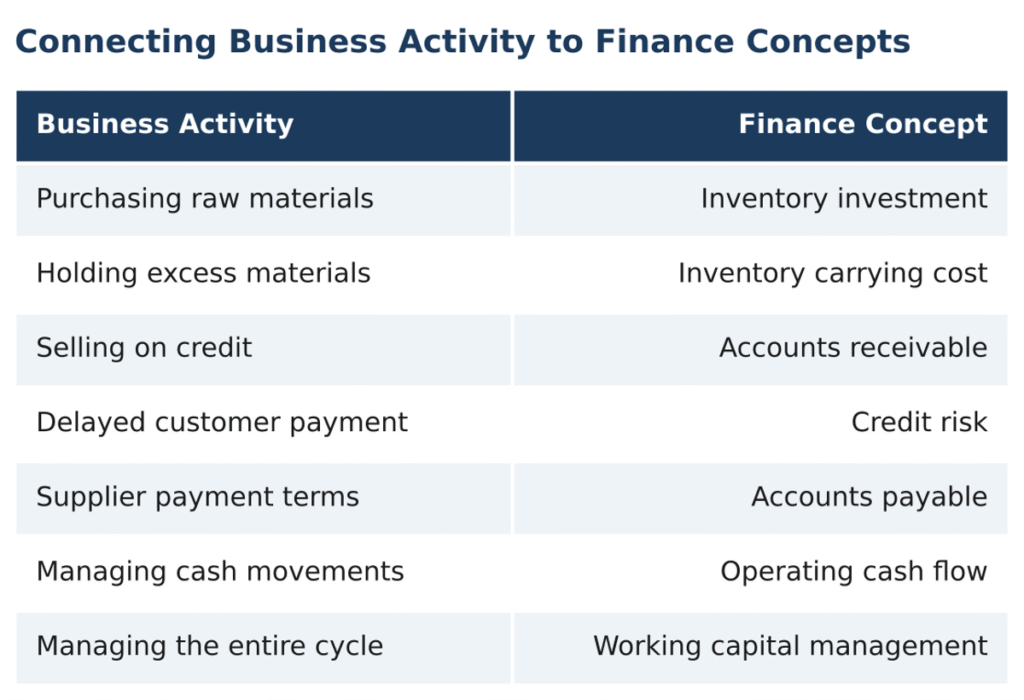
Connecting the Concepts
David now begins to see that inventory, receivables, payables and cash flow are not separate accounting topics. They are interconnected financial management decisions.
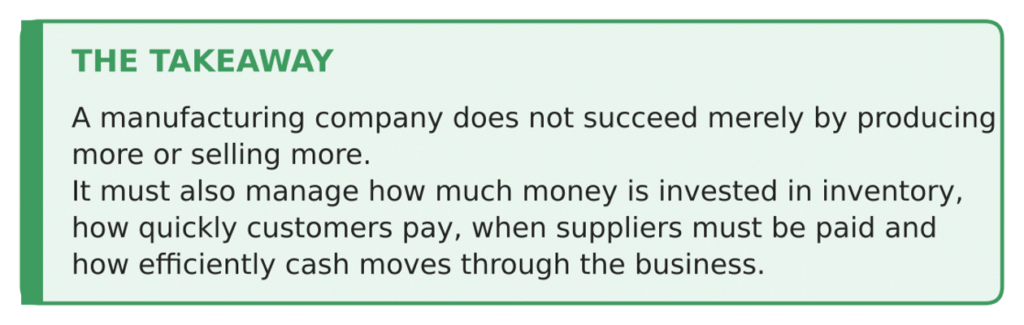
The Takeaway

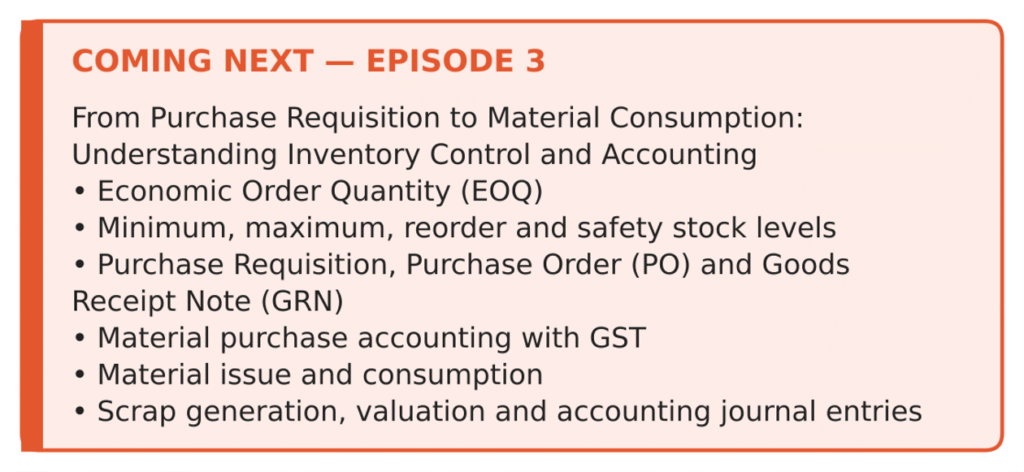
David is about to discover how a simple purchase of raw materials involves operational controls, documentation, taxation and accounting.
The journey from factory operations to financial understanding continues.
very easily Understandable
Thank you sir.