
Applicable from Tax Year 2026–27
Student: Professor, in our previous blog, we learnt about the five heads of income. But once an individual earns income under different heads, how does the Income-tax Department determine the tax payable?
Professor: That is the next important step. The five heads help us classify income. Individual taxation takes us further: we aggregate the income, arrive at total income after eligible deductions, apply the relevant tax rates and determine the final tax liability.
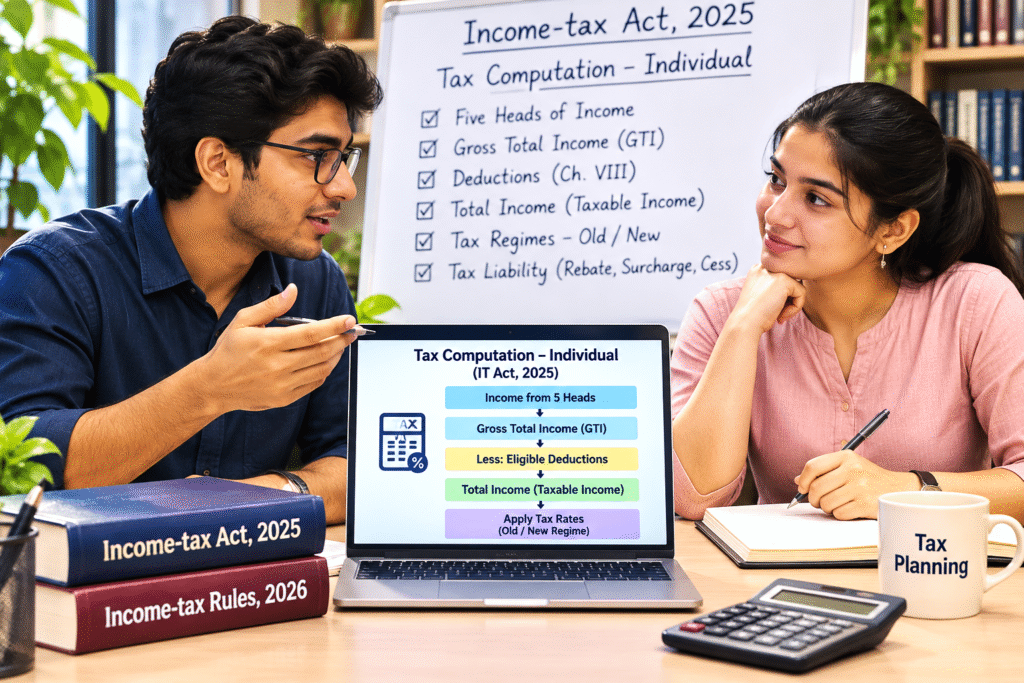
Let’s understand this process under the Income-tax Act, 2025, applicable from Tax Year 2026–27.
Who is an Individual Taxpayer?
An individual is a separate category of taxpayer under the Income-tax Act, 2025. An individual may earn income as a salaried employee, professional, entrepreneur, investor, landlord or pensioner
The tax treatment depends on several factors, including the nature of income, residential status, applicable deductions and the tax regime selected.
Residential status is particularly important because it influences whether income earned outside India may also become taxable in India.
The Starting Point: Five Heads of Income
An individual’s income is classified under five heads:
- Salaries
- Income from House Property
- Profits and Gains of Business or Profession
- Capital Gains
- Income from Other Sources
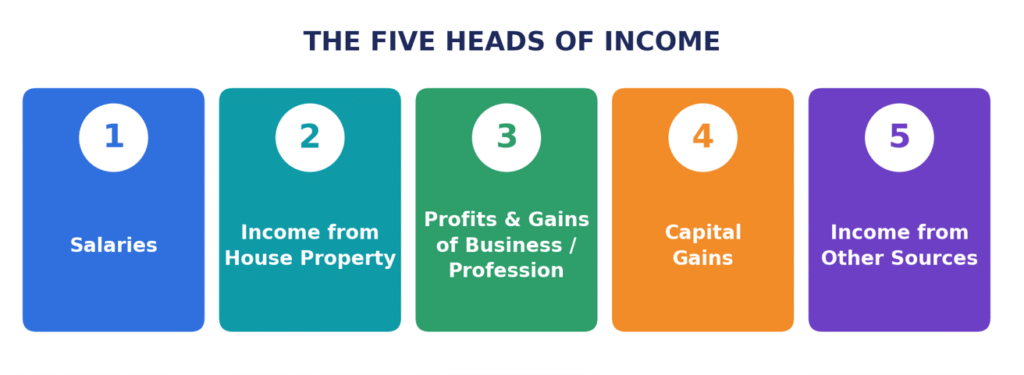
Each head has its own computation rules. For example, salary income may include taxable allowances and perquisites, while income from house property follows specific rules for determining its taxable annual value.
The important principle: Income must first be computed under the relevant head. Only then can the amounts be brought together for the computation of total income.
From Gross Total Income to Total Income
After computing income under the applicable heads, the next step is to aggregate the taxable amounts, subject to the relevant provisions governing adjustments and set-off of losses.
This leads to Gross Total Income (GTI).
Eligible deductions are then considered under Chapter VIII of the Income-tax Act, 2025, subject to the conditions and restrictions prescribed in the Act.
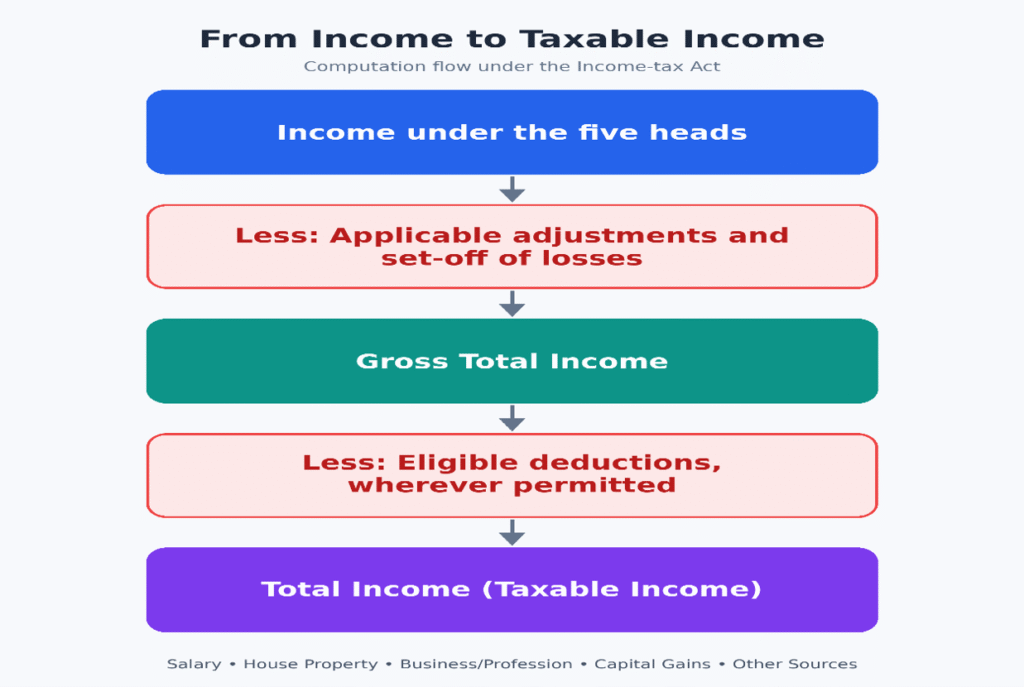

| Section 122 provides the general framework for deductions from Gross Total Income. The aggregate deductions under the chapter cannot exceed Gross Total Income. |
Old Tax Regime and New Tax Regime
An individual should not select a tax regime merely because one has lower tax rates. The decision requires a comparison of the final tax liability after considering eligible deductions and exemptions.
Under the Income-tax Act, 2025, the new tax regime under Section 202 is the default regime. An eligible taxpayer may exercise the prescribed option to move out of it and be taxed under the alternative regime, subject to the applicable conditions.
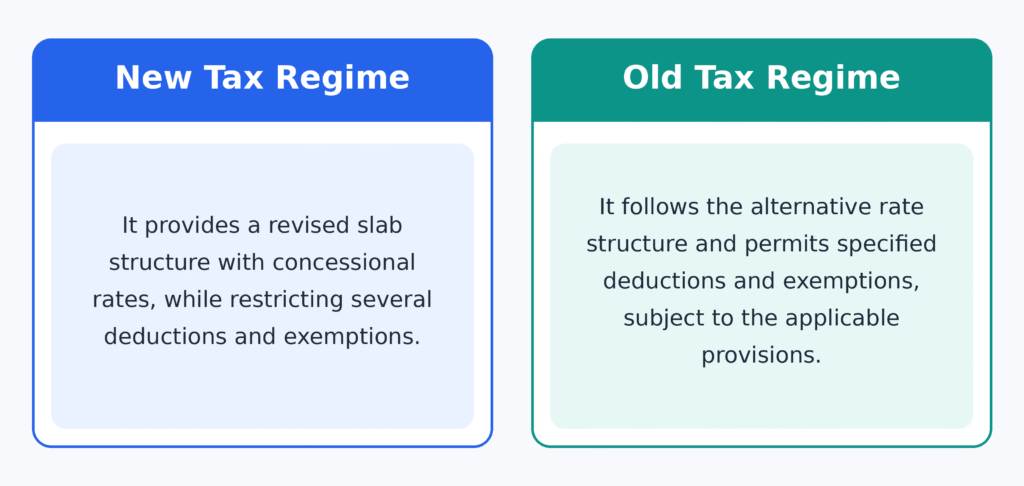

The most suitable regime depends on the taxpayer’s income composition, eligible deductions, investments and other circumstances.
Tax Slabs under the New Tax Regime
For Tax Year 2026–27, Section 202 provides the following slab rates:
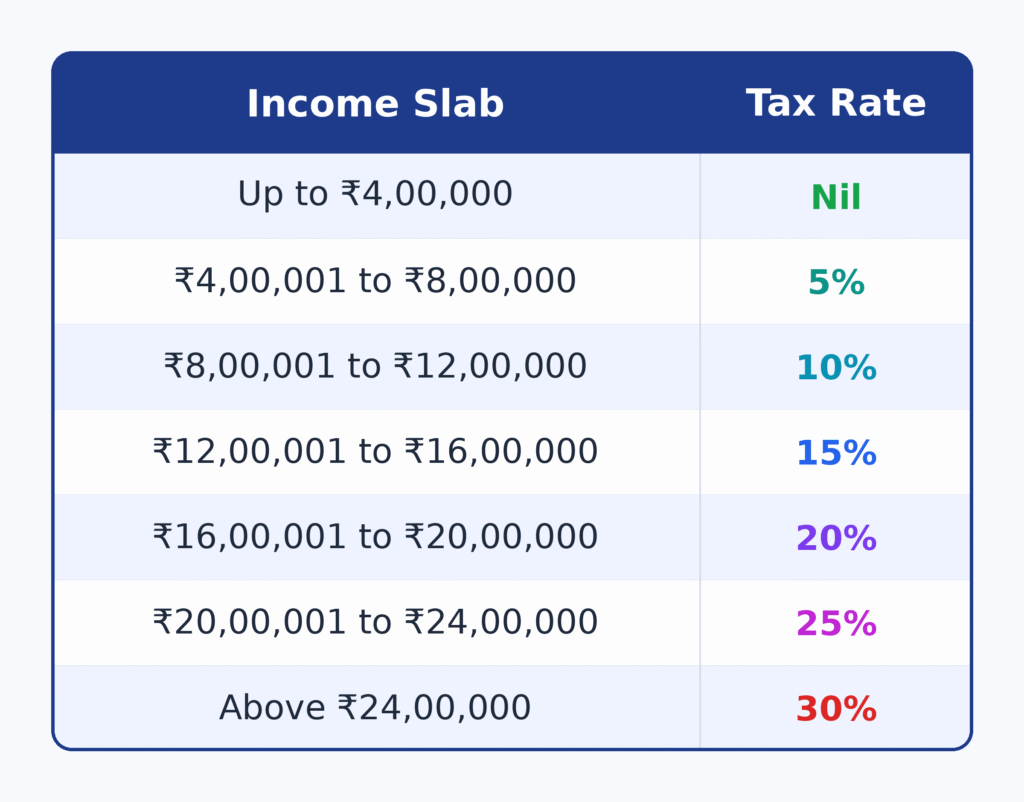
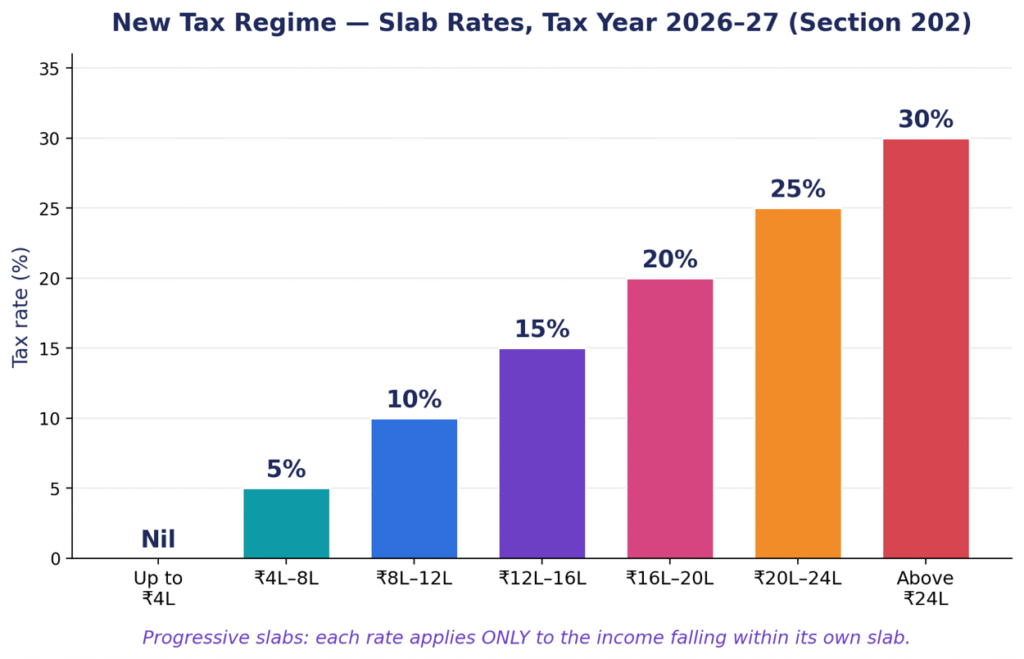
| These are progressive slab rates. Each rate applies only to the income falling within its respective slab, not to the entire taxable income. |
Rebate, Surcharge and Health & Education Cess
The tax calculation does not end with applying the slab rates.
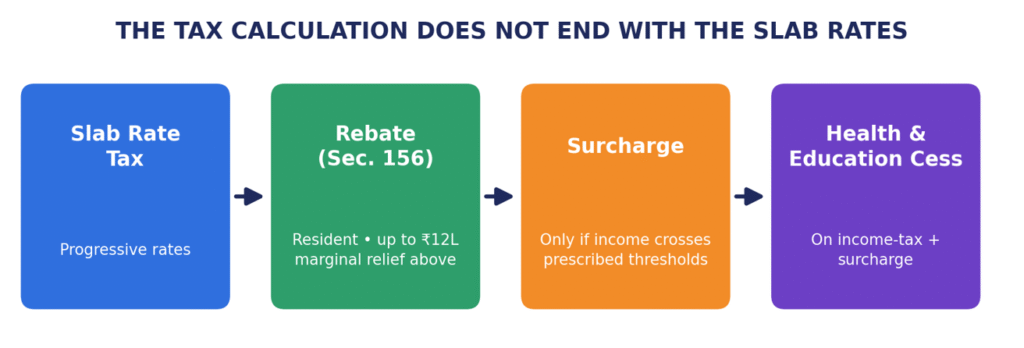
Rebate: A resident individual may be eligible for a rebate under Section 156, subject to the applicable conditions. Under the new regime, the rebate is available where total income does not exceed ₹12 lakh, with marginal relief in specified circumstances when income exceeds that limit.
Surcharge & Cess: Surcharge may apply when total income crosses the prescribed thresholds. Health and Education Cess is then calculated on income-tax and surcharge, wherever applicable.
Therefore, the final tax liability must be determined only after considering all applicable provisions
Practical Case Study: Calculating an Individual’s Tax Liability
Consider Mr. Rohan Mehta, a resident individual, whose income for Tax Year 2026–27 has been computed under the applicable provisions as follows:
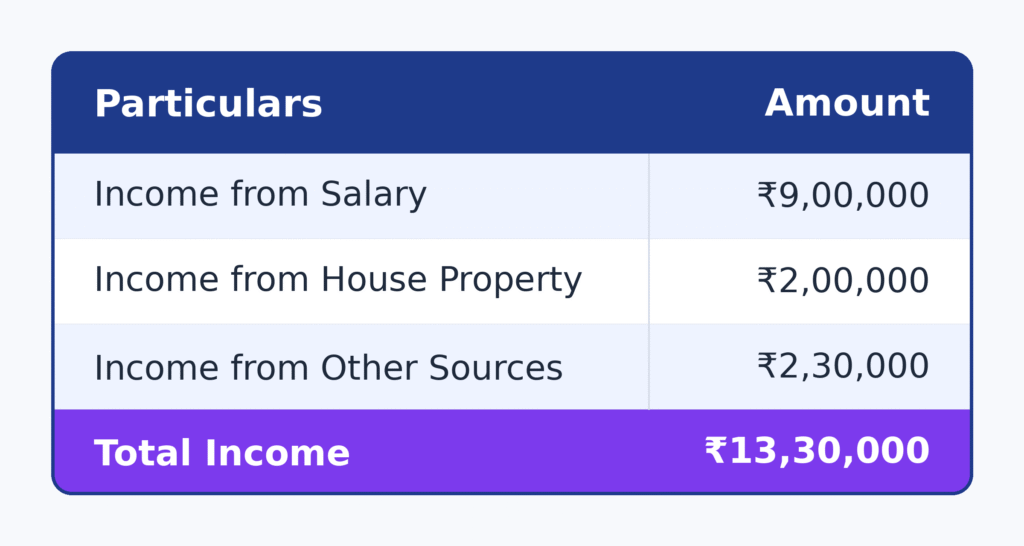
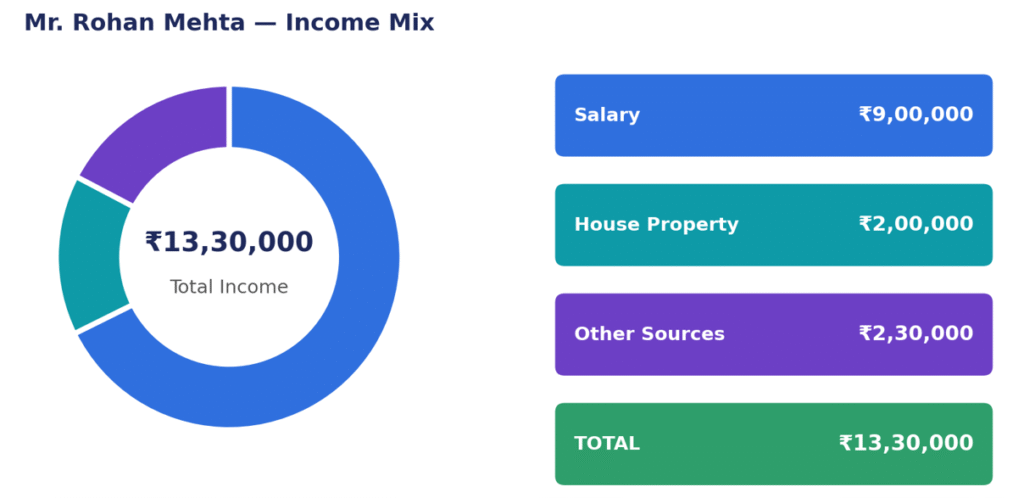
Assume that ₹13,30,000 is his final taxable income after considering all applicable head-wise computations, adjustments and deductions. Also assume that the income is taxable at normal slab rates and there is no special-rate income.


This illustration demonstrates how progressive slab rates operate. In an actual tax computation, the taxpayer’s eligibility for rebate, special-rate provisions, deductions and other adjustments must also be examined.
Common Mistakes Made by Individual Taxpayers
A few mistakes can affect the accuracy of an individual tax return:
- Reporting salary income but overlooking interest or dividend income.
- Treating gross receipts as taxable income without applying the relevant computation rules.
- Claiming deductions without checking eligibility.
- Selecting a tax regime without comparing the final tax liability.
- Ignoring capital gains or other income subject to special tax rates.
- Confusing tax deducted at source with the final tax liability.

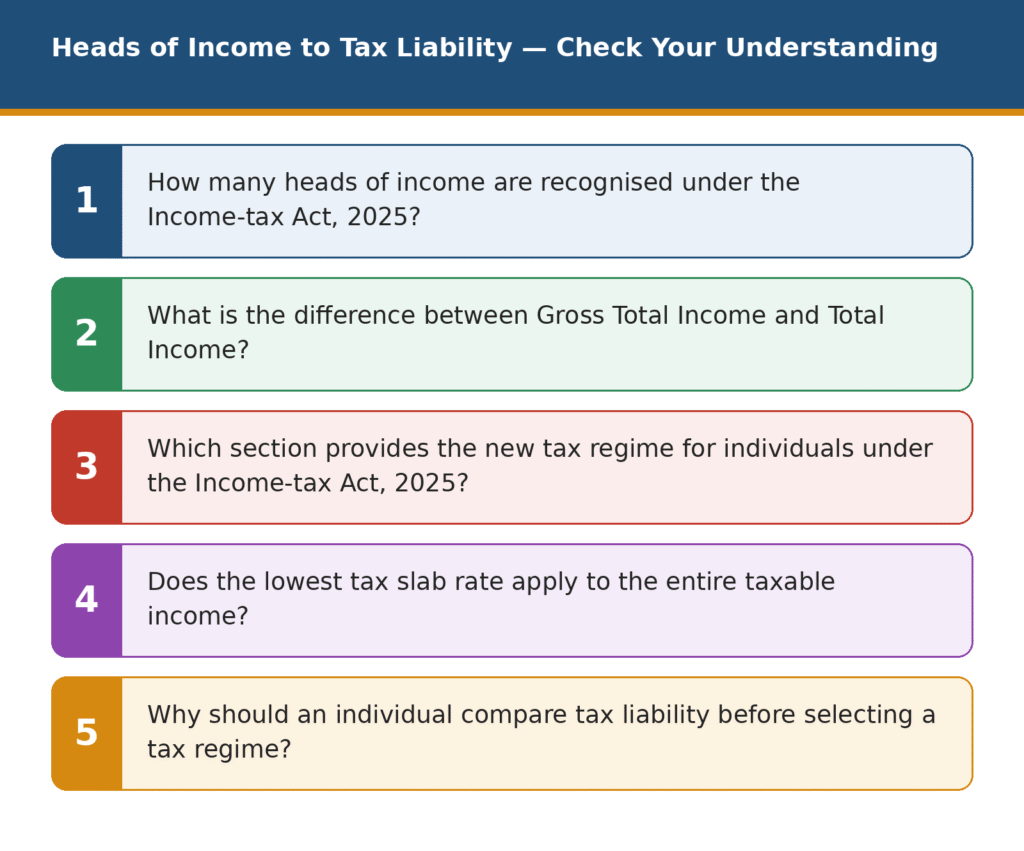
FintaxLens® Quick Check
What’s Next?
Understanding individual taxation is not merely about applying tax rates. It is about recognising income, applying the correct computation provisions, evaluating available tax benefits and ensuring compliance.
In our next blog, we will explore Normal Tax Rates and Special Tax Rates under the Income-tax Act, 2025. We will understand how different categories of income are taxed, how income taxable at special rates is treated while computing an individual’s tax liability, and how a resident individual can claim the rebate available under the new tax regime, including the applicable conditions and marginal relief.
Because calculating tax is not just about applying slab rates—it is also about understanding the nature of income and the tax relief available under the law.
Disclaimer: This article is intended for educational purposes. Tax rates and provisions should be checked against the applicable law, rules and notifications before making a tax computation or filing a return