
Student: Sir, if an individual earns income in India, does that automatically mean that income tax must be paid? And how is a Hindu Undivided Family (HUF) treated differently?
This question opens an important area of Indian taxation. Before calculating tax, we must understand who is being taxed, which income is taxable, and how residential status affects the tax treatment.
The Income-tax Act, 2025, effective from 1 April 2026, provides the legislative framework for income earned during Tax Year 2026–27 onwards. Let us explore the fundamentals through a classroom discussion.
1. Who is a Person under the Income-tax Act, 2025?
Student: Sir, does income tax apply only to individuals?
Professor: No. The Act recognises different categories of persons for income-tax purposes.
These include:

The applicable provisions depend on the category of taxpayer. This is why identifying the correct taxable person is the first step in tax computation.
2. Individual vs HUF: What is the Difference?
Student: Can a family be treated as a separate taxpayer?
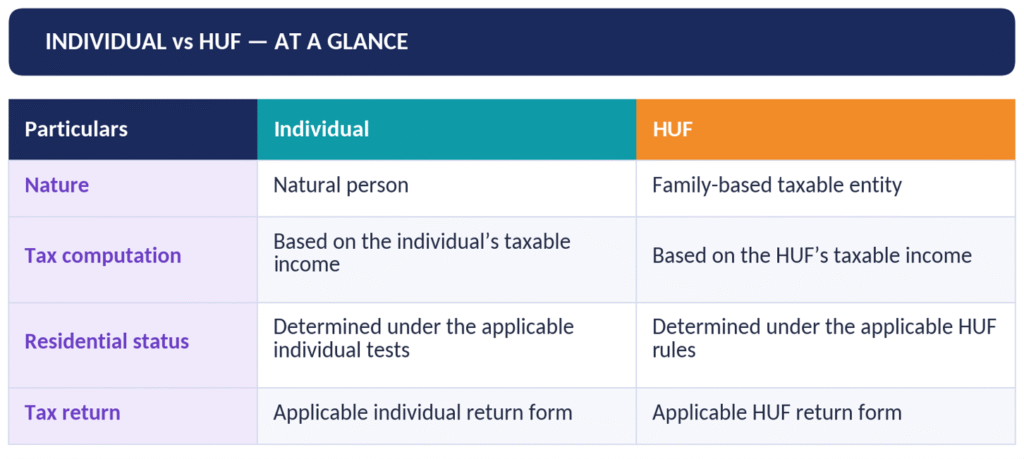
Professor: Yes. An HUF may be assessed as a separate taxable entity, subject to the applicable legal requirements.
An individual is a natural person. Income earned by an individual is generally examined in that person’s own tax computation, subject to provisions such as clubbing of income.
A Hindu Undivided Family (HUF) is a family unit recognised under Hindu law for relevant legal and tax purposes. It may have income from family property, investments and other sources.
An HUF is not simply a group of relatives pooling their personal salaries. The ownership and character of the income, applicable legal principles and supporting documentation must be examined.
3. Why is Residential Status Important?
Student: “If someone is an Indian citizen, must all their income be taxable in India?”
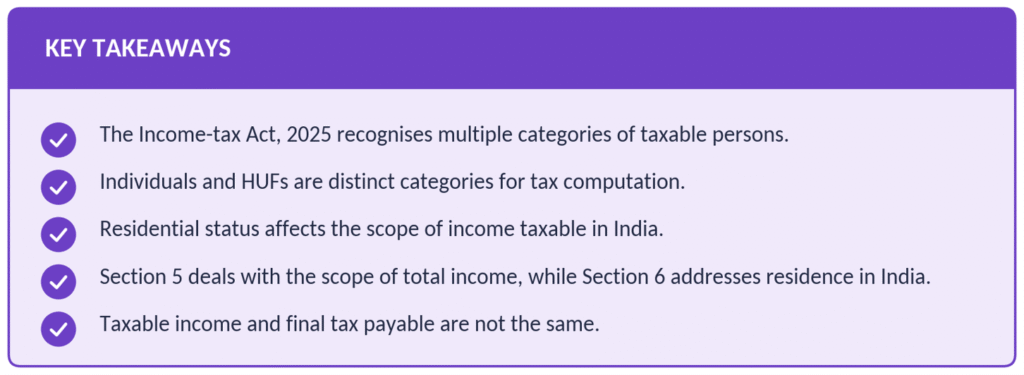
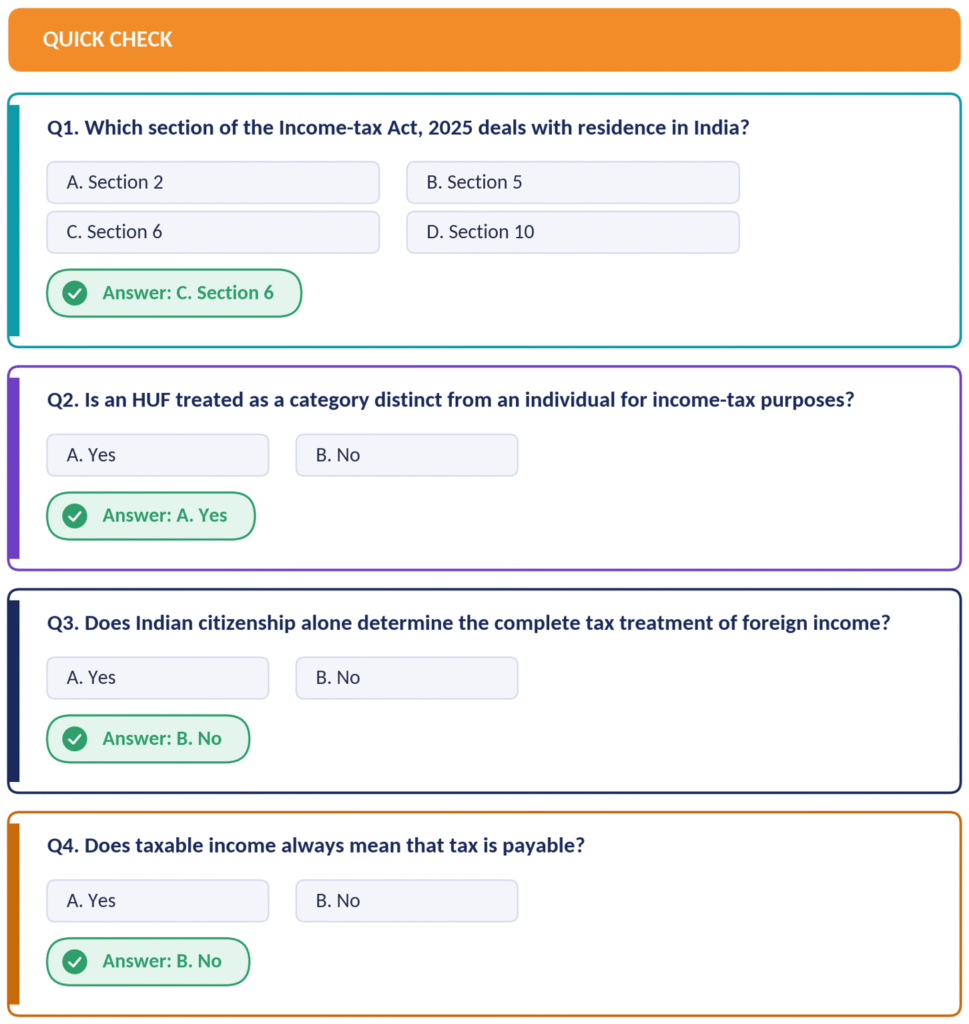
Professor: Citizenship alone does not determine the complete tax treatment. Residential status and the source and receipt of income are important.
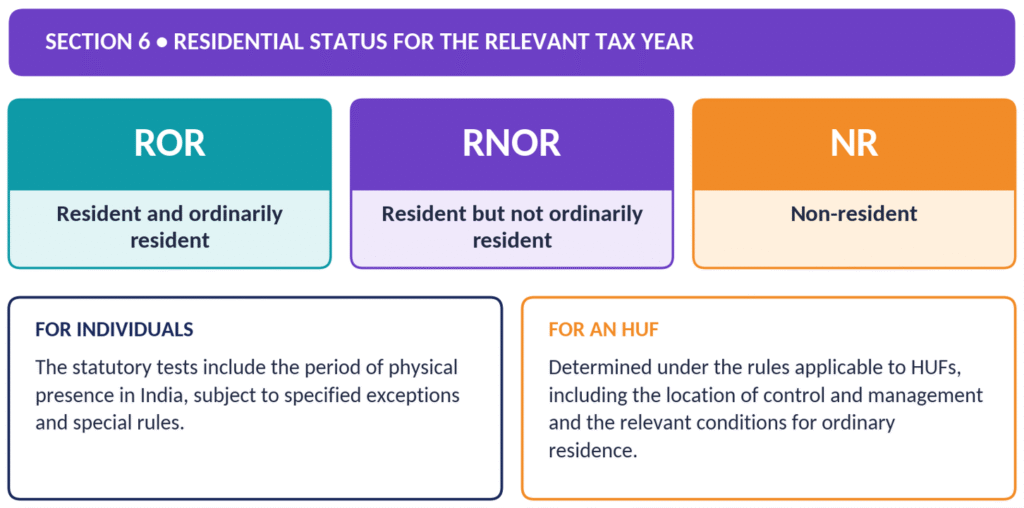
Under Section 6 of the Income-tax Act, 2025, residential status is determined for the relevant Tax Year.
For individuals, the statutory tests include the period of physical presence in India, subject to specified exceptions and special rules. The applicable classification can include:
- Resident and ordinarily resident (ROR)
- Resident but not ordinarily resident (RNOR)
- Non-resident (NR)
The applicable tests must be examined carefully, particularly for Indian citizens working abroad, visiting non-residents and individuals with foreign income.
For an HUF, residential status is determined under the rules applicable to HUFs, including the location of control and management and the relevant conditions for determining whether it is ordinarily resident

4. How Does Residential Status Affect Taxability?
Student: Does residential status change the amount of income that India can tax?
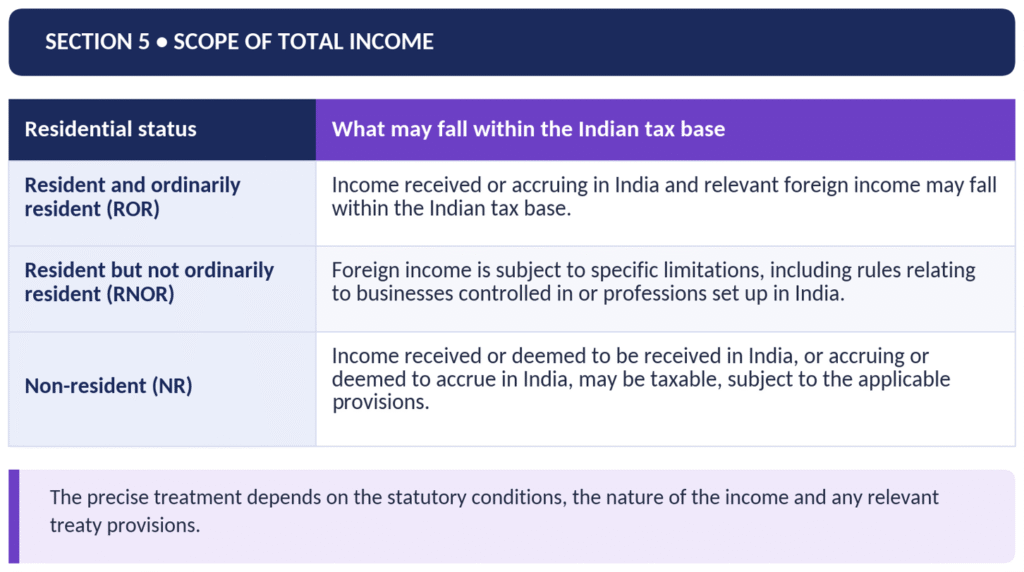
Professor: Yes. It can significantly affect the scope of total income taxable in India.
Section 5 of the Income-tax Act, 2025 deals with the scope of total income. Broadly:
5. A Practical Classroom Case Study
Consider two fictional taxpayers for Tax Year 2026–27.
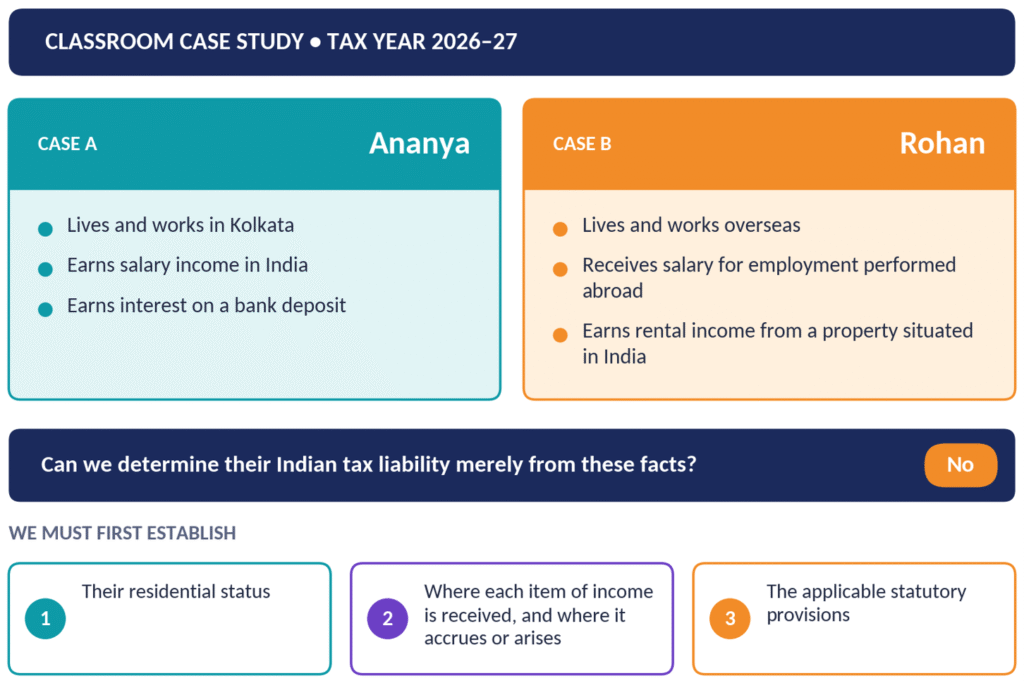
Professor: Can we determine their Indian tax liability merely from these facts?
Answer: No. We must first establish their residential status, identify where each item of income is received and where it accrues or arises, and examine the applicable statutory provisions.
Ananya’s income will be examined under the rules applicable to her residential status. For Rohan, the Indian property income may be taxable in India, while the treatment of his foreign salary requires examination of the relevant facts and applicable law.
This illustrates why taxability must be determined before tax liability is calculated.
6. Taxable Income Does Not Always Mean Tax Payable
Student: If income is taxable, does the taxpayer always have to pay tax?
Professor: Not necessarily.
Taxable income and final tax payable are different concepts. The calculation may involve:

Depending on the applicable provisions and the taxpayer’s circumstances, the final tax payable may be nil, or a refund may arise.
Therefore, being a taxable person, having taxable income and having tax payable are three distinct questions.