

Single Filer vs. Married Filing Jointly — A Case Study
2025 Alternative Minimum Tax (AMT) Rules Illustrated
The following two case studies illustrate how the 2025 AMT rules work in practice. By comparing a Single Filer with a Married Filing Jointly (MFJ) couple, we can see how the AMT exemption and 26%/28% rates affect the calculation of tentative minimum tax.
CASE STUDY 1 — SINGLE TAXPAYER
A Single High-Income Taxpayer
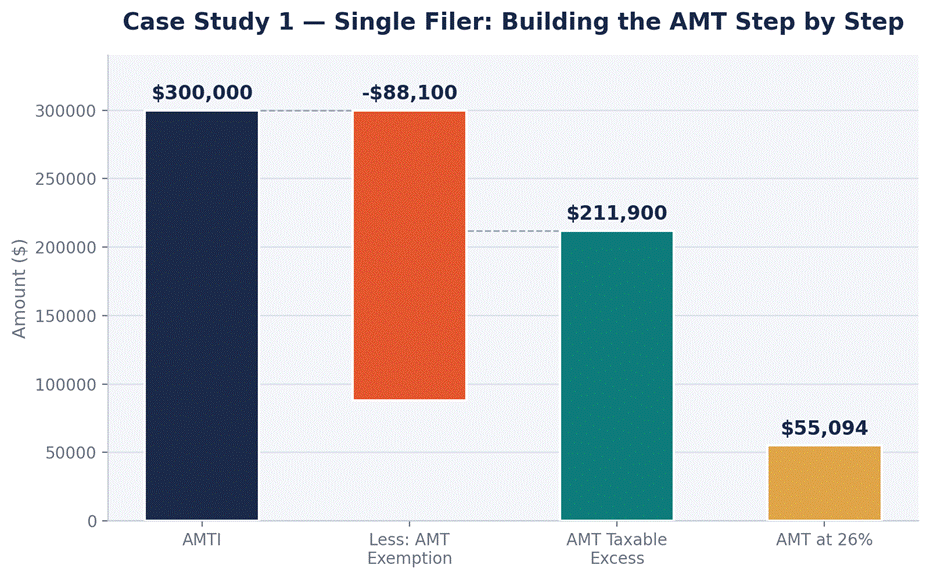
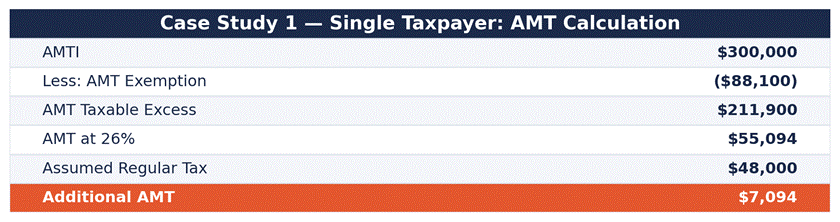
John is a single taxpayer for 2025. After making the required AMT adjustments, his AMTI and assumed regular federal tax liability are shown below.
| AMTI | $300,000 |
| Assumed Regular Federal Tax | $48,000 |
Step-by-Step Calculation
- Step 1 — Determine AMT Exemption: the 2025 single taxpayer exemption is $88,100.
- Step 2 — Calculate AMT Taxable Excess: $300,000 − $88,100 = $211,900.
- Step 3 — Apply AMT Rate: since $211,900 is below the $239,100 breakpoint, the entire amount is taxed at 26% → $211,900 × 26% = $55,094.
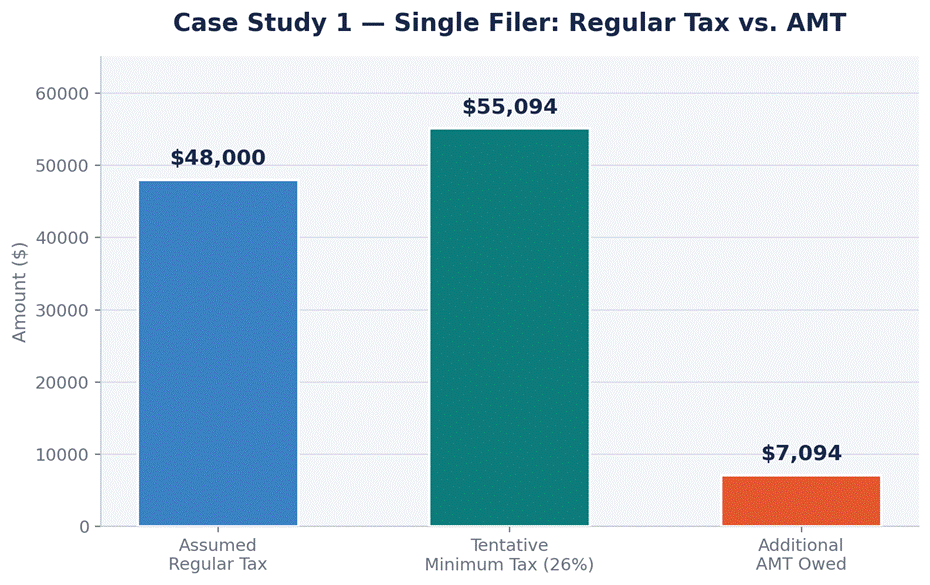
- Step 4 — Compare: the Tentative Minimum Tax ($55,094) is compared with the assumed regular tax ($48,000).
Conclusion
John’s tentative minimum tax is $55,094, which is higher than his assumed regular tax of $48,000. Therefore, Additional AMT = $7,094. This illustrates the central principle: the taxpayer does not simply pay whichever tax calculation looks lower. The AMT system requires a comparison between the regular tax system and the minimum-tax calculation.
CASE STUDY 2 — MARRIED FILING JOINTLY (MFJ)
A Married Couple with $500,000 of AMTI
Consider a married couple filing jointly. This example is also consistent with the numerical illustration in the uploaded reference.
| AMTI | $500,000 |
| 2025 MFJ AMT Exemption | $137,000 |
Step-by-Step Calculation
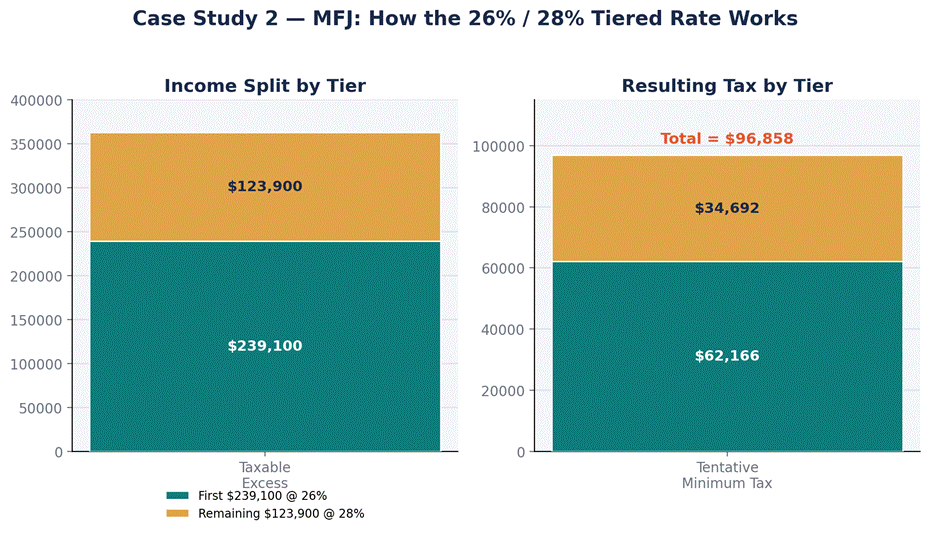
- Step 1 — Calculate AMT Taxable Excess: $500,000 − $137,000 = $363,000.
- Step 2 — Apply 26% Rate: first $239,100 × 26% = $62,166.
- Step 3 — Apply 28% Rate: remaining $363,000 − $239,100 = $123,900; $123,900 × 28% = $34,692.
- Step 4 — Calculate Tentative Minimum Tax: $62,166 + $34,692 = $96,858.
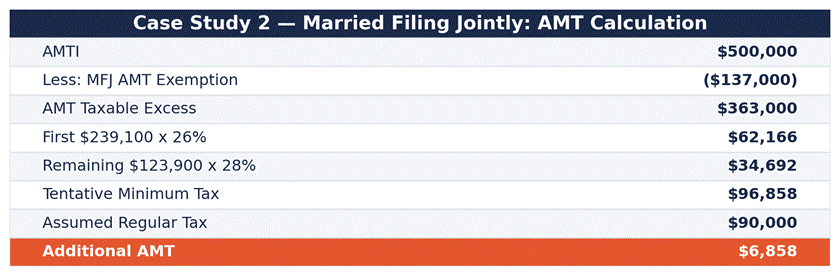
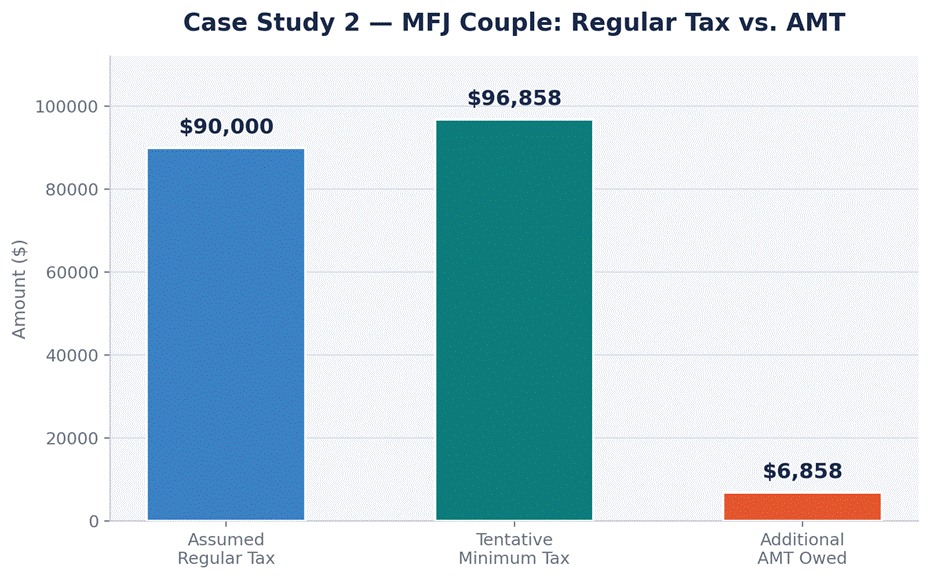
If the couple’s applicable regular federal tax liability were, for example, $90,000, the simplified difference would be $96,858 − $90,000 = $6,858. Therefore, under this illustration, the couple would have Additional AMT = $6,858.
The actual Form 6251 calculation can involve additional adjustments and credits, so the $6,858 figure is an educational illustration rather than a tax-return computation.
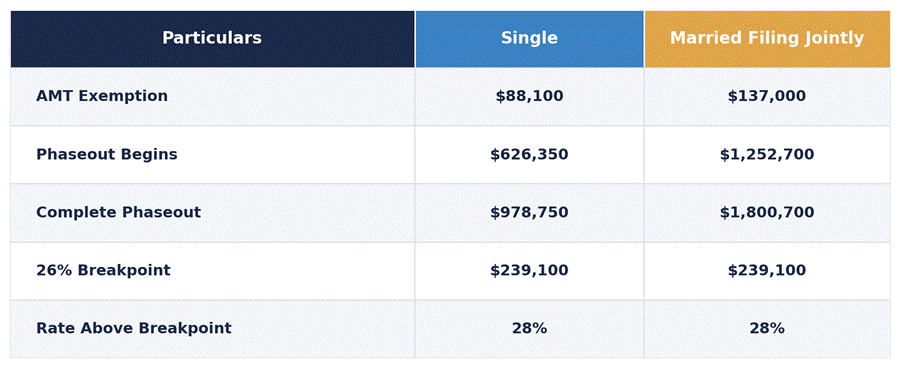
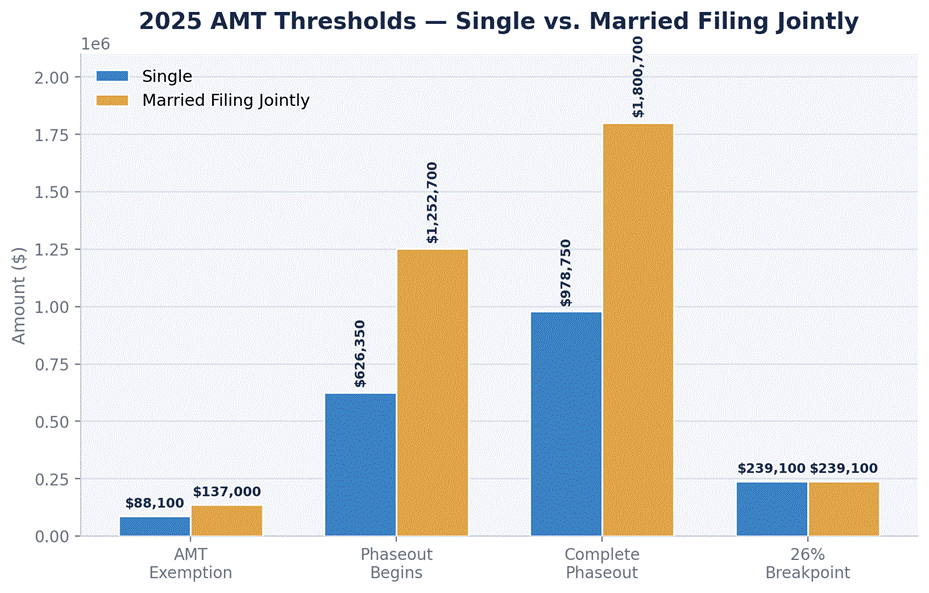
SINGLE VS. MFJ — 2025 AMT COMPARISON
COMMON MISTAKES ABOUT AMT
| Mistake 1 Wrong claim: “AMT applies to everyone.” Correction: AMT is relevant only when the taxpayer’s AMT calculation produces a higher liability than the regular tax calculation. |
| Mistake 2 Wrong claim: “AMT starts when income exceeds $88,100.” Correction: $88,100 is the 2025 AMT exemption for a single taxpayer, not an AMT income threshold. |
| Mistake 3 Wrong claim: “$626,350 means AMT starts.” Correction: For a single taxpayer, $626,350 is the beginning of the exemption phaseout. |
| Mistake 4 Wrong claim: “The 28% rate applies to all AMT income.” Correction: For 2025, the first $239,100 taxable excess for most taxpayers is subject to the 26% rate; the excess is generally subject to 28%. |
| Mistake 5 Wrong claim: “AMTI is the same as taxable income.” Correction: AMTI is calculated using special AMT adjustments and preference rules. |
Very informative, thank you sir.