

A student-friendly guide to U.S. federal tax credits, Tax Year 2025
After calculating taxable income and claiming all eligible deductions, the next important step in preparing a U.S. federal tax return is identifying tax credits. Unlike deductions, which only reduce taxable income, tax credits reduce actual tax liability dollar-for-dollar — and some credits can even generate a refund when no tax is owed. That makes them one of the most valuable tax-saving tools in the U.S. tax system.
1. Tax Deduction vs. Tax Credit
Students often confuse the two — but the difference decides how much money actually stays in a taxpayer’s pocket.
| Particulars | Tax Deduction | Tax Credit |
| Reduces | Taxable Income | Tax Liability |
| Benefit depends on | Tax bracket | Dollar-for-dollar |
| Refund possible? | No | Some credits: Yes |
| Example | Standard Deduction | Child Tax Credit |
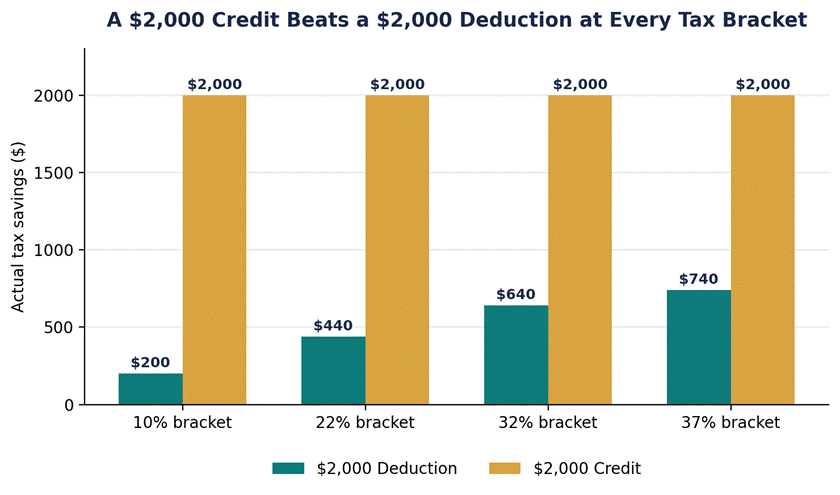
A $2,000 credit saves $2,000 for every filer. A $2,000 deduction only saves $2,000 × your tax rate — so it’s worth less the lower your bracket.
A $2,000 tax credit saves exactly $2,000 — regardless of the taxpayer’s tax bracket. A $2,000 deduction, by contrast, would only save $2,000 × (tax rate).
2. Two Types of Tax Credits
Every federal tax credit falls into one of two buckets — and the difference matters enormously when a credit is larger than the tax owed.
| Refundable Tax Credit | Non-Refundable Tax Credit |
| Can reduce tax below zero | Can reduce tax only to zero |
| Excess amount is refunded | Excess credit simply expires |
| More valuable to low-tax-liability filers | Limited to tax payable |
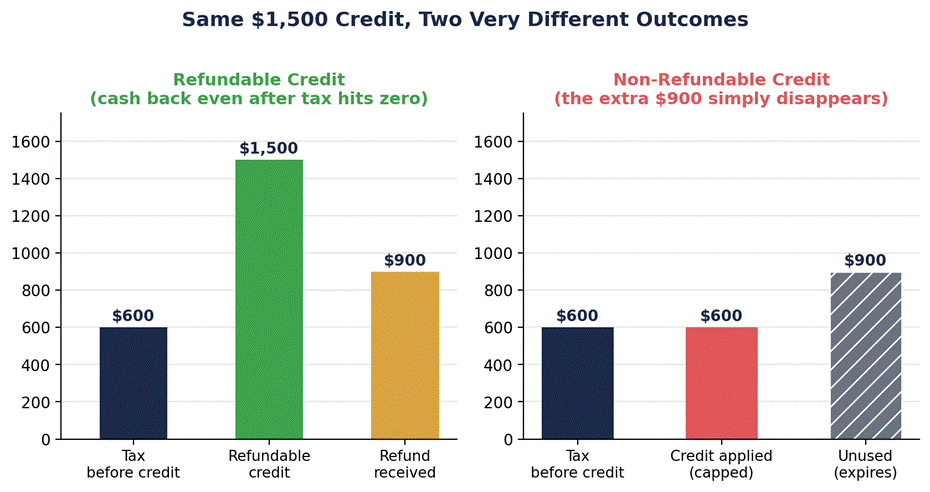
Same $1,500 credit against $600 of tax — a refundable credit pays the extra $900 back; a non-refundable credit lets it expire unused.
3. Tax Year 2025 — Refundable & Partially Refundable Credits
| Tax Credit | Type | Maximum Benefit | IRS Form | Key Requirement |
| Earned Income Tax Credit (EITC) | Refundable | Varies by filing status & children | Schedule EIC / Form 1040 | Valid SSN, earned income, investment-income limit |
| Additional Child Tax Credit (ACTC) | Refundable | Refundable portion of CTC | Schedule 8812 | Child needs valid SSN, meets qualifying-child tests |
| American Opportunity Tax Credit (AOTC) | Partially refundable | Up to $2,500 (40% refundable) | Form 8863 | First 4 years of post-secondary education |
| Premium Tax Credit (PTC) | Refundable | Based on marketplace premium | Form 8962 | Reconcile advance payments with return |
| Recovery Credits (if authorized) | Refundable | As prescribed by law | Applicable IRS form | Available only when authorized by Congress |
4. Tax Year 2025 — Major Non-Refundable Credits
| Tax Credit | Type | Maximum Benefit | IRS Form | Compliance Note |
| Child Tax Credit (CTC) | Partially non-refundable | Up to statutory max per child | Schedule 8812 | Age, relationship, residency, SSN tests |
| Credit for Other Dependents (ODC) | Non-refundable | Up to statutory max per dependent | Schedule 8812 | Dependent not eligible for CTC |
| Lifetime Learning Credit (LLC) | Non-refundable | Up to $2,000 | Form 8863 | Unlimited years of eligibility |
| Child & Dependent Care Credit | Non-refundable | % of eligible care expenses | Form 2441 | Care provider’s TIN/EIN required |
| Foreign Tax Credit (FTC) | Non-refundable | Limited to U.S. tax on foreign income | Form 1116 | Cannot double up with another relief provision |
| Adoption Credit | Non-refundable | Subject to annual IRS limit | Form 8839 | Qualified adoption expenses + documentation |
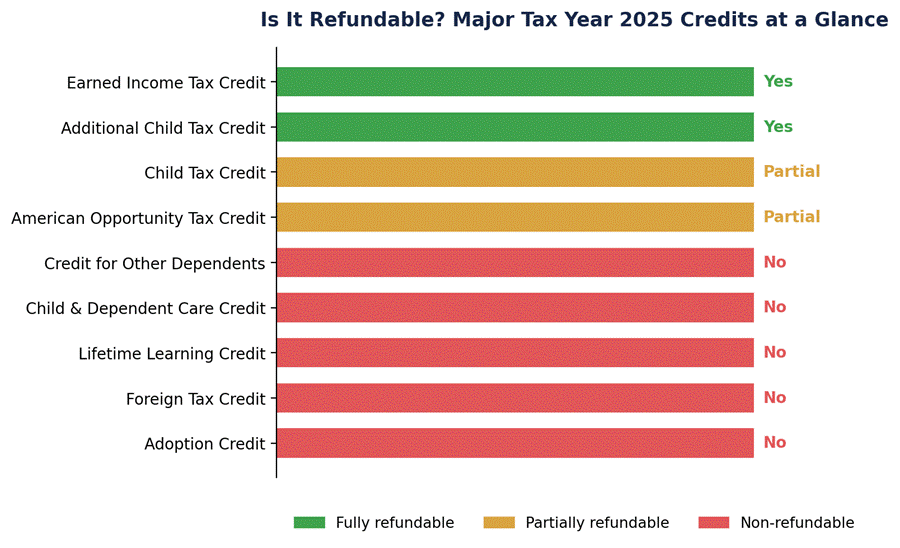
5. Quick Reference — Major Credits at a Glance
6. Spotlight: Child Tax Credit (CTC)
Eligibility flows through a simple test — walk a qualifying child through each step below:
The Child Tax Credit helps reduce the tax burden for families with qualifying children. Depending on eligibility, a portion may also be refundable through the Additional Child Tax Credit.
| Amount | |
| Tax liability | $2,400 |
| Eligible Child Tax Credit | ($2,000) |
| Final tax | $400 |
7. Spotlight: Education Tax Credits
| Feature | American Opportunity Credit | Lifetime Learning Credit |
| Eligible students | Undergraduate students | Undergraduate & graduate |
| Maximum benefit | $2,500 | $2,000 |
| Refundable? | Partially refundable | Non-refundable |
| Duration | First four years only | Unlimited years |
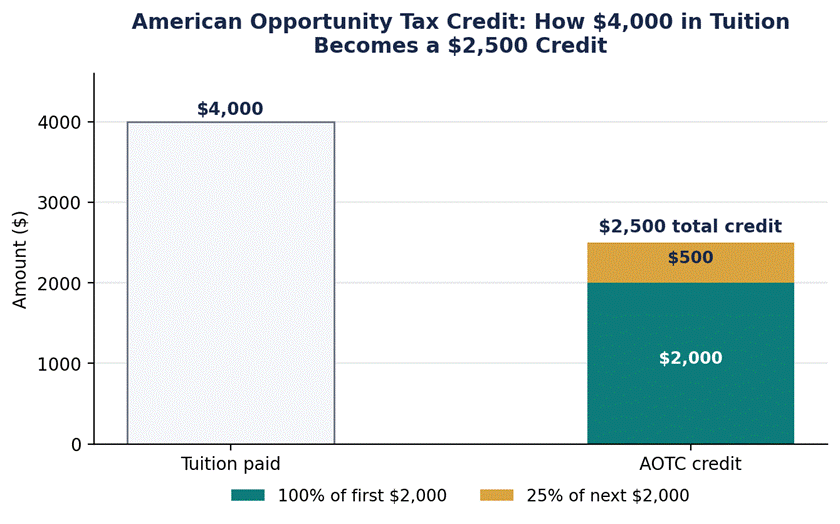
$4,000 in tuition paid: 100% of the first $2,000 plus 25% of the next $2,000 = a $2,500 credit.
8. Spotlight: Foreign Tax Credit (FTC)
This credit prevents taxpayers from paying income tax twice on the same foreign-source income, subject to IRS limitations.
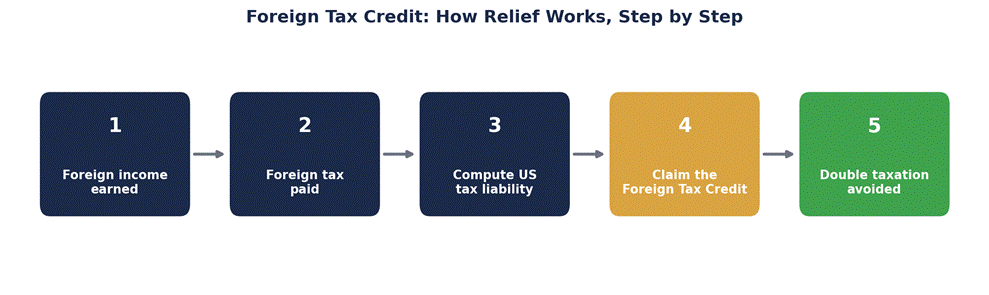
$10,000 of foreign dividend income: $1,000 foreign tax paid is credited against $2,500 of US tax on the same income, leaving $1,500 due.
Case Study — Tax Year 2025
Read this short case to see several credits working together on one real-style return.
The Sharma Family, Filing Jointly (Illustrative)
Raj and Meera Sharma file a joint federal return for Tax Year 2025. They have two children: a 10-year-old who qualifies for the Child Tax Credit, and a 19-year-old college freshman for whom they paid $4,000 in tuition. Meera also received $10,000 in foreign dividend income and paid $1,000 in foreign tax on it. Before any credits, their federal income tax works out to $9,200.
| Credit Applied | Basis | Amount |
| Child Tax Credit (1 qualifying child) | Statutory amount per child | $2,000 |
| American Opportunity Tax Credit (college freshman) | 100% × $2,000 + 25% × $2,000 | $2,500 |
| Foreign Tax Credit (foreign dividend income) | Lower of foreign tax paid or US tax on that income | $1,000 |
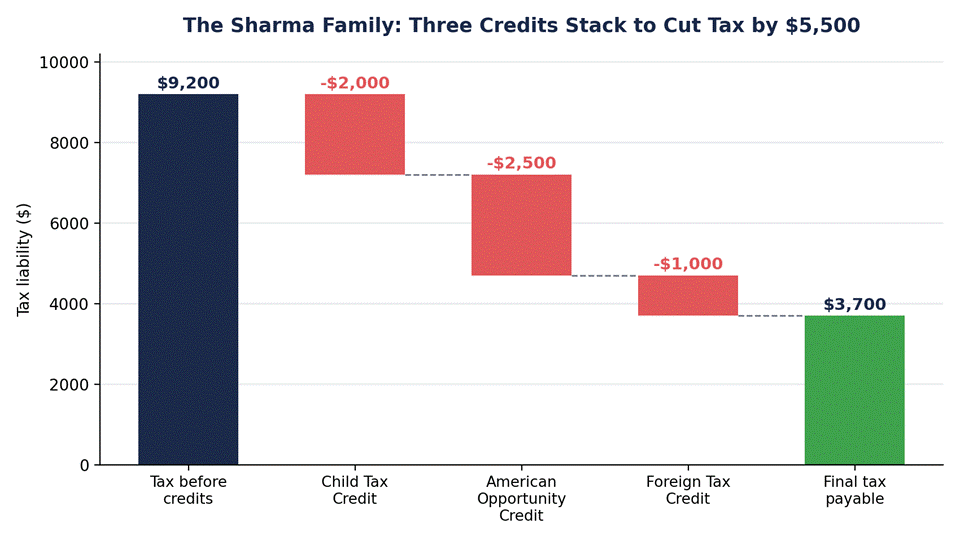
| Computation | Amount |
| Tax liability before credits | $9,200 |
| Less: Child Tax Credit | ($2,000) |
| Less: American Opportunity Tax Credit | ($2,500) |
| Less: Foreign Tax Credit | ($1,000) |
| Final tax payable | $3,700 |
Takeaway for students: the Sharma’s’ credits come from three different categories — a family credit (CTC), an education credit (AOTC), and a double-taxation relief credit (FTC) and all three stack on the same return. Their $5,500 combined credit cut tax liability by exactly $5,500, from $9,200 down to $3,700. None of this is investment or tax advice — always check current-year IRS thresholds and phase-outs before filing.
Disclaimer:
This blog has been prepared solely for educational and learning purposes to provide students with a high-level understanding of the fundamentals of the U.S. federal tax system. The content is intended to explain key concepts in a simplified manner and should not be construed as tax, legal, or professional advice. As U.S. tax laws, IRS regulations, forms, and filing requirements are subject to change and may vary depending on individual circumstances, students are encouraged to refer to the latest IRS publications, instructions, forms, and official guidance for detailed provisions and authoritative interpretation.
You’re the man behind every student’s success.
Always excited to read your US Tax blogs. Thank you, sir 😊