

Why EBITDA Matters in the Corporate World
In today’s competitive business environment, evaluating a company’s true operating performance goes beyond simply looking at its net profit. Investors, lenders, equity analysts, investment bankers, private equity firms, and corporate managers need a measure that reflects how efficiently a business generates earnings from its core operations, independent of financing decisions, tax environments, and accounting policies. This is where EBITDA (Earnings Before Interest, Taxes, Depreciation, and Amortization) plays a vital role. EBITDA is not a substitute for net income or cash flow, it serves as a powerful analytical tool for assessing the earning potential of a business before the effects of financing and accounting choices.
In short, EBITDA answers one fundamental question: How profitable is a company’s core business operation? Understanding this metric is therefore essential for finance professionals, investors, entrepreneurs, and students seeking to analyze business performance with greater clarity and confidence.
What is EBITDA?
EBITDA stands for
Earnings Before Interest, Taxes, Depreciation and Amortization.
Consider Smart Manufacturing Ltd.
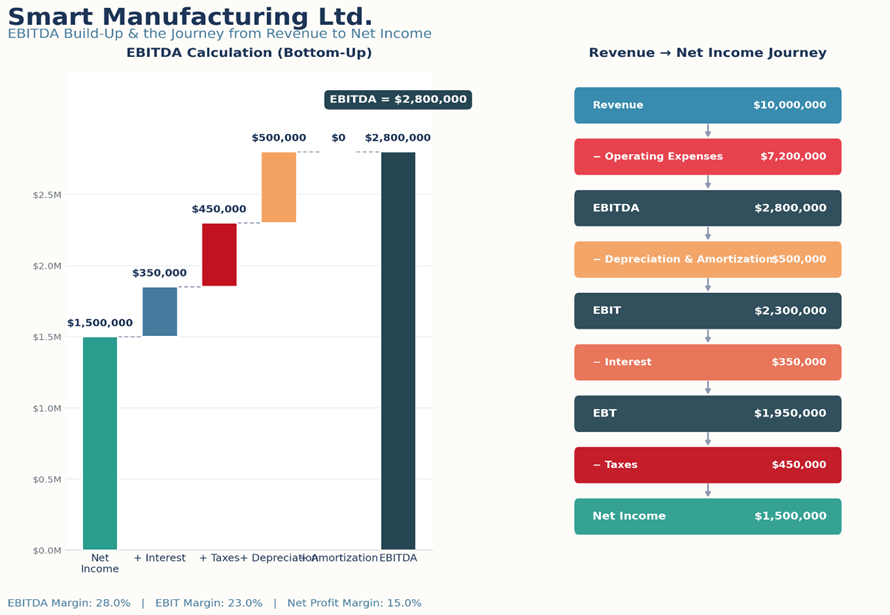
Journey from Revenue to Net Income
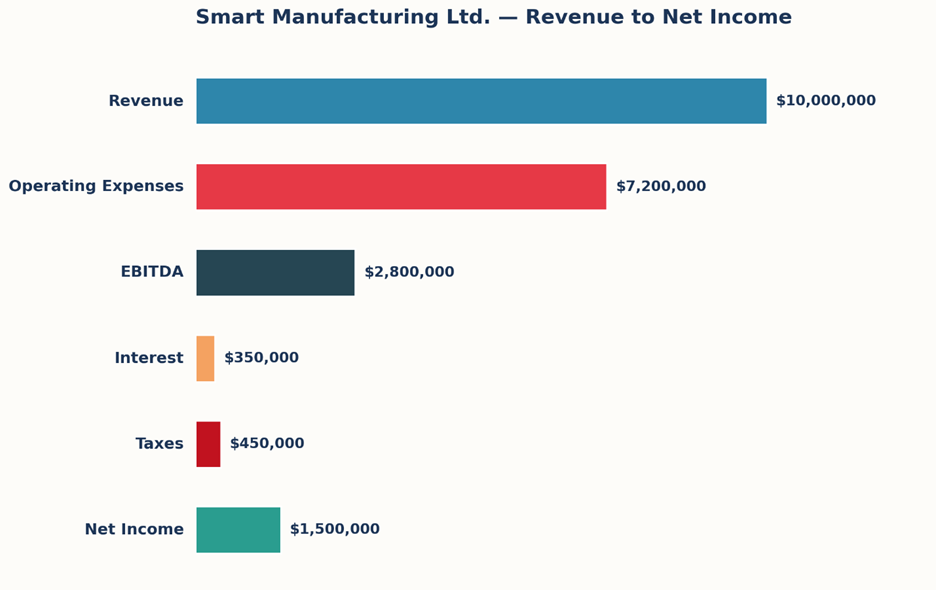
Why Do Analysts Prefer EBITDA?
Because it answers a simple question:
How efficiently is the core business generating earnings?
Refer this image – I. Why does EBITDA enable fair competition?
II. Example of comparing two companies
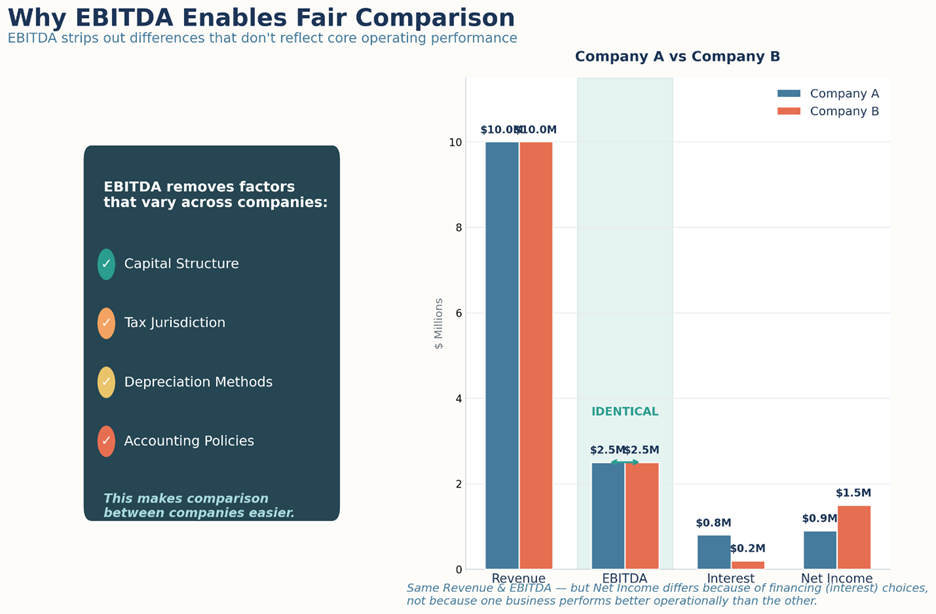
Looking only at Net Income suggests Company B performs better.
However,
EBITDA shows both companies generate identical operating performance.
The difference comes from financing decisions.
This is exactly why Investment Bankers focus on EBITDA.
Let’s check EBITDA vs Net income in the next image
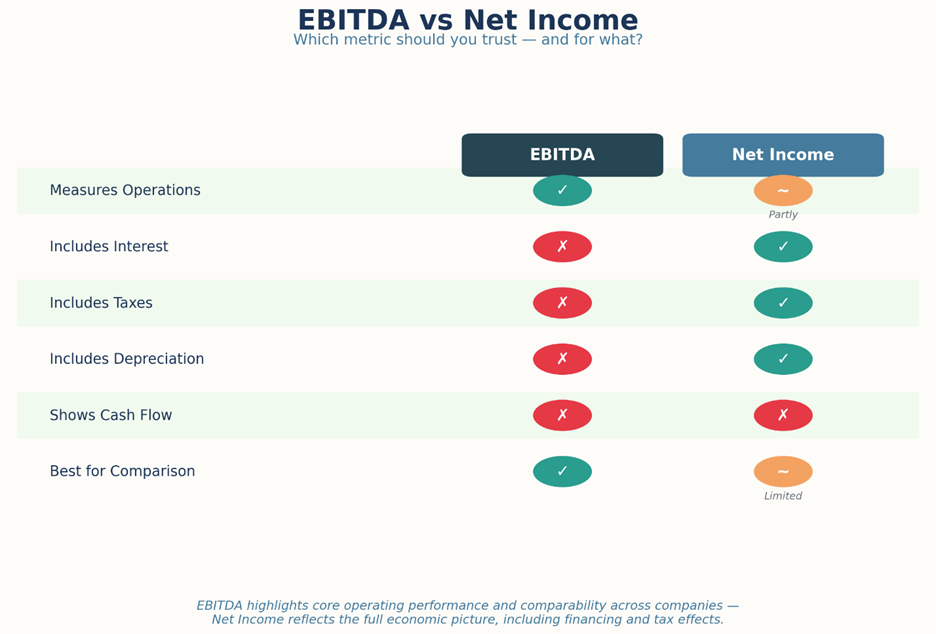
Note: EBITDA highlights core operating performance and comparability across companies but Net Income reflects the full economic picture, including financing and tax effects.
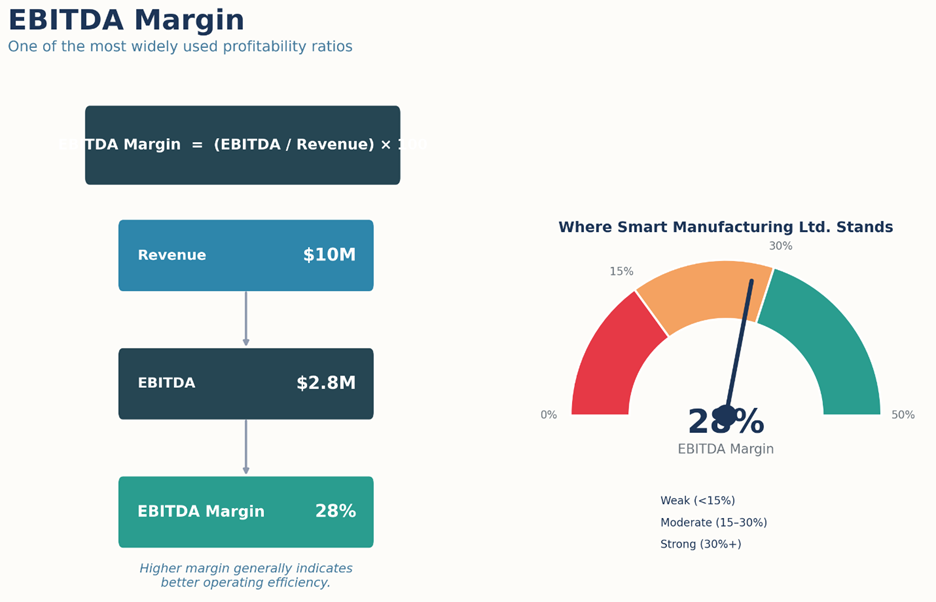
EBITDA Margin
One of the most widely used profitability ratios.
EBITDA Margin = EBITDA/Revenue*100
EBITDA: Applications and Limitations
EBITDA is widely used to assess a company’s core operating performance by eliminating the effects of financing, taxes, and non-cash expenses. However, it should not be viewed in isolation, as it does not reflect cash flow, capital expenditure, or debt obligations.
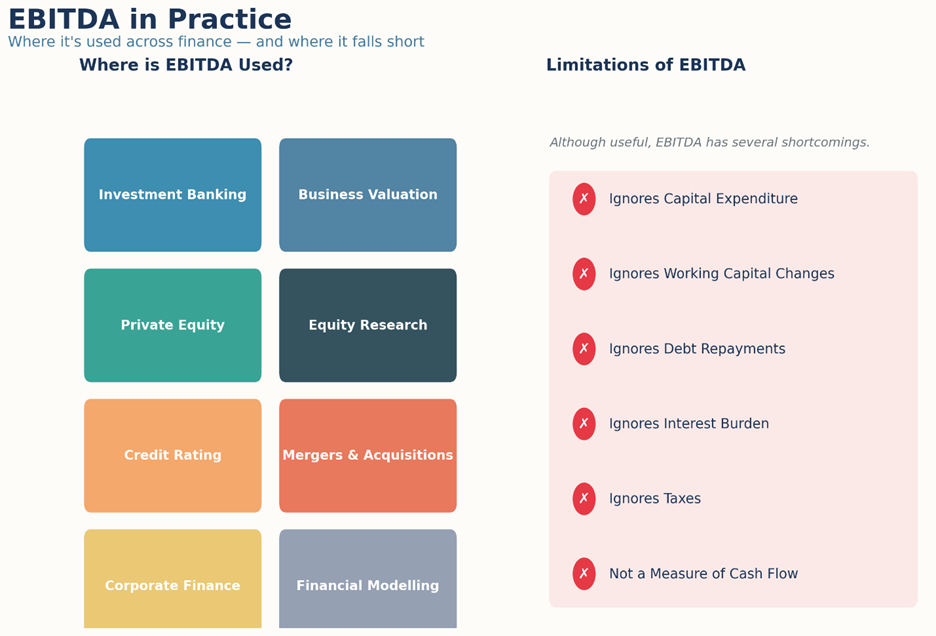
Note: A company may report high EBITDA while facing severe liquidity problems.
Reality Check
Imagine a company:
Revenue: $100 million
EBITDA: $30 million
Cash Flow from Operations: –$8 million
Despite impressive EBITDA, the business struggles to collect receivables and fund operations.
This demonstrates why investors should analyze Cash Flow Statements alongside EBITDA.
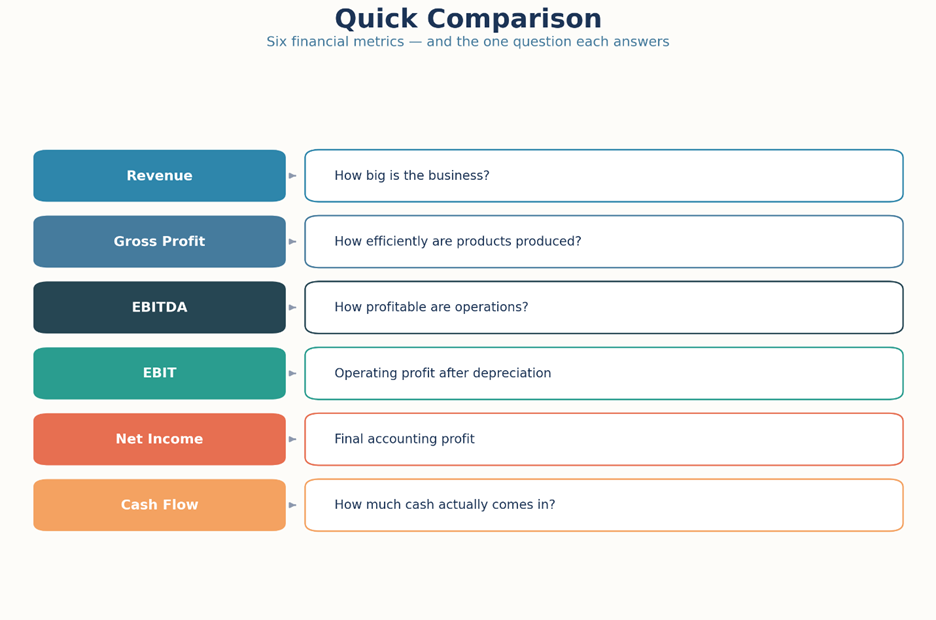
Insight
Revenue tells you the size of a business. Net Income tells you the accounting profit. EBITDA reveals operating strength. But Cash Flow tells you the financial reality.
Very Practical Explanation , Sir thank you for such an insightful blog
Just like other blogs this one was also very helpful. Thank u sir!
VERY HELPFUL
Gained a lot from this blog. Thank You Sir.