Dr. Sujit Dutta

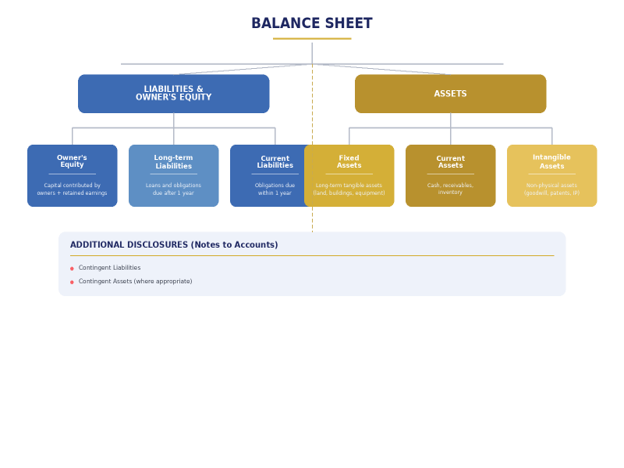
Asset side of the balance sheet

Debt–Equity & Interest Coverage Ratio: Linking Lending Decisions with Ind AS 23

In today’s competitive business environment, companies frequently rely on external financing to support expansion, manage working capital, or undertake capital-intensive projects. Financial institutions, however, do not extend credit based solely on growth prospects—they closely evaluate a company’s financial stability and repayment capacity before making lending decisions. Two of the most critical metrics in this evaluation […]

Debt–Equity & Interest Coverage Ratio: Linking Lending Decisions with Ind AS 23 Read More »

Understanding Debt Service Coverage Ratio (DSCR) from a Lending Perspective

Lending institutions use this ratio as a key measure of a company’s ability to pay off the principal and interest on a loan. Before granting a loan, the bank will calculate your company’s debt service coverage ratio. If it’s good, the bank will consider that you should be able to meet your repayment obligations. If

Understanding Debt Service Coverage Ratio (DSCR) from a Lending Perspective Read More »

Break-even point

Understanding Break-Even Point within Cost Concepts

In business, every activity involves a sacrifice of resources—materials, manpower, money and time. This sacrifice, when expressed in monetary terms, is known as cost. Whether a firm is manufacturing a product or providing a service, cost becomes the starting point for all financial decisions. But understanding cost is not just about knowing “how much” is

Understanding Break-Even Point within Cost Concepts Read More »

Hedging

Hedging: A Tool to Manage Foreign Currency Risk

Students, suppose you are working in the treasury department of an MNC. Your company enters into foreign currency transactions every day. We know that forex market is volatile and exchange rate volatility can turn profits into losses overnight. Therefore, your responsibility is not to predict the market, but to protect the company using hedging tools

Hedging: A Tool to Manage Foreign Currency Risk Read More »

Purchasing Power Parity

Understanding Purchasing Power Parity (PPP) in Foreign Exchange Transactions

Purchasing power parity (PPP) is an economic theory of exchange rate determination. It states that the price levels between two countries should be equal. Example: If markets are efficient and trade is possible, exchange rates should reflect the purchasing power of currencies. This idea leads to the Purchasing Power Parity (PPP) Theory. In simple words:

Understanding Purchasing Power Parity (PPP) in Foreign Exchange Transactions Read More »

Alternative Minimum Tax

Alternative Minimum Tax (AMT) and AMT Credit Adjustment – A Conceptual Overview

Alternative Minimum Tax (AMT), introduced for non-corporate taxpayers to address disparities in tax payments and prevent individuals from significantly reducing their tax liability through tax benefits. The AMT includes a provision for the carry forward of the AMT credit, which allows taxpayers to use the excess amount paid as AMT against their regular tax liability

Alternative Minimum Tax (AMT) and AMT Credit Adjustment – A Conceptual Overview Read More »

Minimum Alternate Tax (MAT): Concept and Practical Application

Minimum Alternate Tax (MAT) is an important provision under the Income Tax Act, 1961, designed to ensure that taxpayers with substantial income do not avoid tax liability by claiming various deductions and exemptions. However, students often face confusion regarding its applicability, computation, and differences. To build conceptual clarity, case-based learning can be highly effective. By

Minimum Alternate Tax (MAT): Concept and Practical Application Read More »

Tax rates for Indian Domestic Companies—Normal vs Concessional Regime

Under the Income Tax Act, 1961, domestic companies in India have the option to be taxed either under the normal provisions or under concessional tax regimes such as Section 115BAA of Income Tax Act and Section 115BAB. Under the normal provisions, the applicable tax rate depends on the company’s turnover. Companies with turnover up to

Tax rates for Indian Domestic Companies—Normal vs Concessional Regime Read More »

Understand ITR: Choosing the Right Form for Filing Income Tax

Filing the correct Income Tax Return (ITR) form is a crucial responsibility for taxpayers. However, many people—especially students and first-time filers—often get confused about which ITR form applies to their specific situation. This blog aims to simplify that confusion by providing a clear guide on ITR form numbers and their practical applicability, helping students and

Understand ITR: Choosing the Right Form for Filing Income Tax Read More »

Understanding Transaction and Translation Risk Adjustments in Financial Statements

Translation Exposure: The translation exposure is also called accounting exposure or balance sheet exposure. Translation risk is based on assets, equities, liabilities on the Balance Sheet in foreign currency to domestic currency.  Strictly speaking. There is no actual gain or loss seen here. Transaction Exposure: A firm may have some contractually fixed payments and receipts

Understanding Transaction and Translation Risk Adjustments in Financial Statements Read More »