
Dr. Sujit Dutta

Sections 54, 54EC and 54F: Relief from LTCG Tax

Capital gains do not always lead to tax liability. Long-term capital gains tax liability can be significantly reduced if one understands the exemption provisions properly. Sections 54, 54EC and 54F of the Income-tax Act provide valuable relief to taxpayers who transfer long-term capital assets and would otherwise be required to pay substantial tax. Let us […]

Sections 54, 54EC and 54F: Relief from LTCG Tax Read More »

Arbitrage in business strategy

Arbitrage Learning in Business Strategy

In theory, a given currency should carry the same price in different locations/markets. However, market inefficiencies resulting from communication difficulties may result in different prices emerging in different locations at the same time. Arbitrage, takes advantage of these inefficiencies to the benefit of a trader. The process of buying goods/currency in one market and selling

Arbitrage Learning in Business Strategy Read More »

Tax Treatment of Share Transactions in Income Tax

Share capital is the most popular and convenient source of long term finance for companies. The organizations utilise multiple types of issues to raise public funds from the capital market. The IPOs and FPOs are one of those issues through which a company issue (sell-off) financial securities like equity shares for the investors to subscribe.

Tax Treatment of Share Transactions in Income Tax Read More »

Equity or Debt? Understanding Financial Breakeven and Indifference Point

The students were settling into the Corporate Finance class, some eagerly taking the front seats while many quietly occupied the back benches. The room buzzed with low conversations as notebooks and laptops came out. The professor stood calmly in front of the smart board, glanced around the classroom, and smiled. He wrote a few key

Equity or Debt? Understanding Financial Breakeven and Indifference Point Read More »

Optimum capital structure

Optimum Capital Structure and Capitalisation

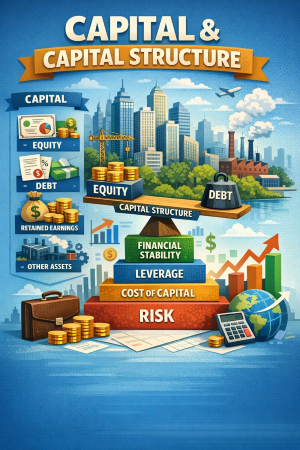
Capital structure refers to the mix of debt, equity, and hybrid securities that a business uses to finance its operations and growth. Debt includes loans and bonds that require repayment, while equity involves raising funds through selling shares that give investors ownership stakes. When we discuss capital structure, the focus is on achieving the optimum

Optimum Capital Structure and Capitalisation Read More »

Risk–Return Dynamics: A Case Study Discussion

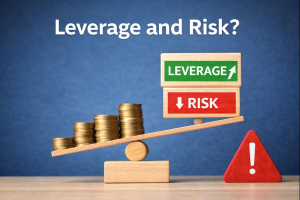
The professor looks at the students and says, Students, case studies are excellent for understanding concepts in real life.But in corporate finance, true clarity comes only when concepts are tested with numbers. He pauses, scans the classroom, and continues, Stories help you visualize a situation, but figures help you understand the logic behind decisions. Then

Risk–Return Dynamics: A Case Study Discussion Read More »

Income from house property

Income from House Property: Understanding Different Scenarios

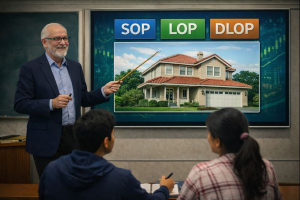
Before we delve into the computations, let us first understand the various types of house properties and how the income from each is brought to tax under the head ‘Income from House Property’. Income tax classifies the properties in three ways: Self-Occupied House Property Let Out House Property Deemed to be Let Out Property Self-Occupied

Income from House Property: Understanding Different Scenarios Read More »